Society & Culture
Anthropocentric Thinking
Anthropocentrism · Humanocentrism · Human Exceptionalism
The tendency to interpret the world primarily through human values, interests, and experience, placing human concerns at the center of moral and practical consideration.
Anthropomorphism
Personification
The tendency to characterize animals, objects, and abstract concepts as possessing human-like traits, emotions, and intentions.
Anti-Bandwagon Effect
Snob Effect · Reverse Bandwagon Effect
A phenomenon whereby the rate of uptake of beliefs, ideas, fads and trends *decreases* the more that they have already been adopted by others (contrary to the Bandwagon Effect).
Apanthropy
Withdrawal or alienation from society or human interaction, often as a result of disappointment or disillusionment with people or society.
Assembly Bonus Effect
The phenomenon where the group performance exceeds the combined contributions of individual group members. There is evidence for both task-specific assembly bonus effects, and a general effect of collective intelligence, analogous to that of general intelligence.
Availability Cascade
A self-reinforcing cycle where an idea gains credibility simply because more people are repeating it. Popularity substitutes for evidence, and the belief snowballs through social networks.
Bandwagon Effect
A phenomenon whereby the rate of uptake of beliefs, ideas, fads and trends increases the more that they have already been adopted by others.
Below-Average Effect
Worse-Than-Average Effect
The tendency to underestimate your own abilities relative to others, especially in areas where you feel inexpert. The flip side of overconfidence.
Ben Franklin Effect
A proposed psychological phenomenon where a person who has already performed a favor for another is more likely to do another favor for the other than if they had received a favor from that person.
Bias Blind Spot
The cognitive bias of recognizing the impact of biases on the judgment of others, while failing to see the impact of biases on one's own judgment.
Birthday-Number Effect
The subconscious tendency of people to prefer the numbers in the date of their birthday over other numbers.
Broken Windows Theory
The theory that maintaining and monitoring urban environments to prevent small crimes such as vandalism, public drinking, and toll-jumping helps to create an atmosphere of order and lawfulness, thereby preventing more serious crimes from happening.
Bystander Apathy
Bystander Effect
A social psychological phenomenon in which individuals are less likely to offer help to a victim when other people are present.
Cargo Cult
A movement first described in Melanesia which encompasses a range of practices and occurs in the wake of contact with more technologically advanced societies, where there was a belief that various ritualistic acts such as the building of an airplane runway will result in the appearance of material wealth, particularly highly desirable Western goods (i.e., cargo), via Western airplanes.
Chilling Effect

The impact that coercion, or threat of coercion, can have in stifling specific behavior, such as general free speech, contributing unpopular opinions, or calling out injustice.
Collective Effervescence
A sociological concept where a community or society may at times come together and simultaneously communicate the same thought and participate in the same action, which in turn excites individuals and serves to unify the group.
Conservatism
Belief Revision
Generally, a political and social philosophy that promotes tradition, hierarchy, and social continuity — though it receives criticism as upholding social and economic inequality, and as making unhelpful societal appeals to nostalgia and a romantic history that has likely been more manufactured than experienced.
Crab Mentality
Crab Bucket Effect · Crabs in a Bucket
Social phenomenon where people in a group try to bring down or sabotage those who try to improve or succeed, out of envy, resentment, or a sense of competition.
Cross-Race Bias
Cross-Race Effect
The tendency to more easily recognize faces of the race that one is most familiar with (which is most often one's own race).
Crowdsourcing
Wisdom of the Crowd · Collective Intelligence
The process of obtaining feedback, services, ideas, or content by soliciting contributions from a large group of people — often associated with Internet communities — where when a large group's aggregated answers to questions has been found to be as good as, and often better than, the answer given by any of the individuals within a group.
Cultural Evolution
Sociocultural Evolution · Cumulative Culture
The idea that cultures change over time through processes analogous to biological evolution — beliefs, customs, languages, and technologies spread, mutate, compete, and sometimes go extinct.
Defensive Attribution Bias
Defensive Attribution Hypothesis
A social psychological term from the attributional approach referring to a set of beliefs used as a shield against the fear that one will be the victim or cause of a serious mishap.
Design by Committee
What happens when too many people contribute to a design without a single unifying vision. The result is often a muddled compromise that satisfies no one.
Dunbar's Number
The suggested cognitive limit to the number of friends one can maintain, in terms of stable, social relationships, which is usually said to be around 150.
Echo Chamber
Metaphorical environment in which beliefs are amplified and reinforced inside of a closed system.
Ecological Fallacy
Inferences about the nature of specific individuals are based solely upon aggregate statistics collected for the group to which those individuals belong.
Egocentric Bias
The tendency to rely too heavily on one's own perspective and/or have a higher opinion of oneself than reality.
Elephant in the Room
An obvious problem or risk that no one wants to discuss but which everyone is silently considering.
Empathy Gap
Cognitive bias in which people underestimate the influences of visceral drives on their own attitudes, preferences, and behaviors.
Extrinsic Incentives Bias
Extrinsic Incentive Bias
An attributional bias where people attribute relatively more to "extrinsic incentives" (such as monetary reward) than to "intrinsic incentives" (such as learning a new skill) when weighing the motives of others rather than themselves.
False-Consensus Effect
False-Consensus Bias
The tendency to overestimate how many other people share your opinions, preferences, and habits — assuming your way of thinking is more "normal" than it actually is.
False-Uniqueness Effect
Illusion of Uniqueness
How people tend to view their qualities, traits and personal attributes as unique, when in reality they are not.
Fika
A ritual of pausing for coffee, a treat, and unhurried conversation. More than a simple break — it is about slowing down and connecting with the people around you.
Florence Nightingale Effect
A trope where a caregiver develops romantic feelings, sexual feelings, or both for their patient, even if very little communication or contact takes place outside of basic care.
FOMO - Fear of Missing Out
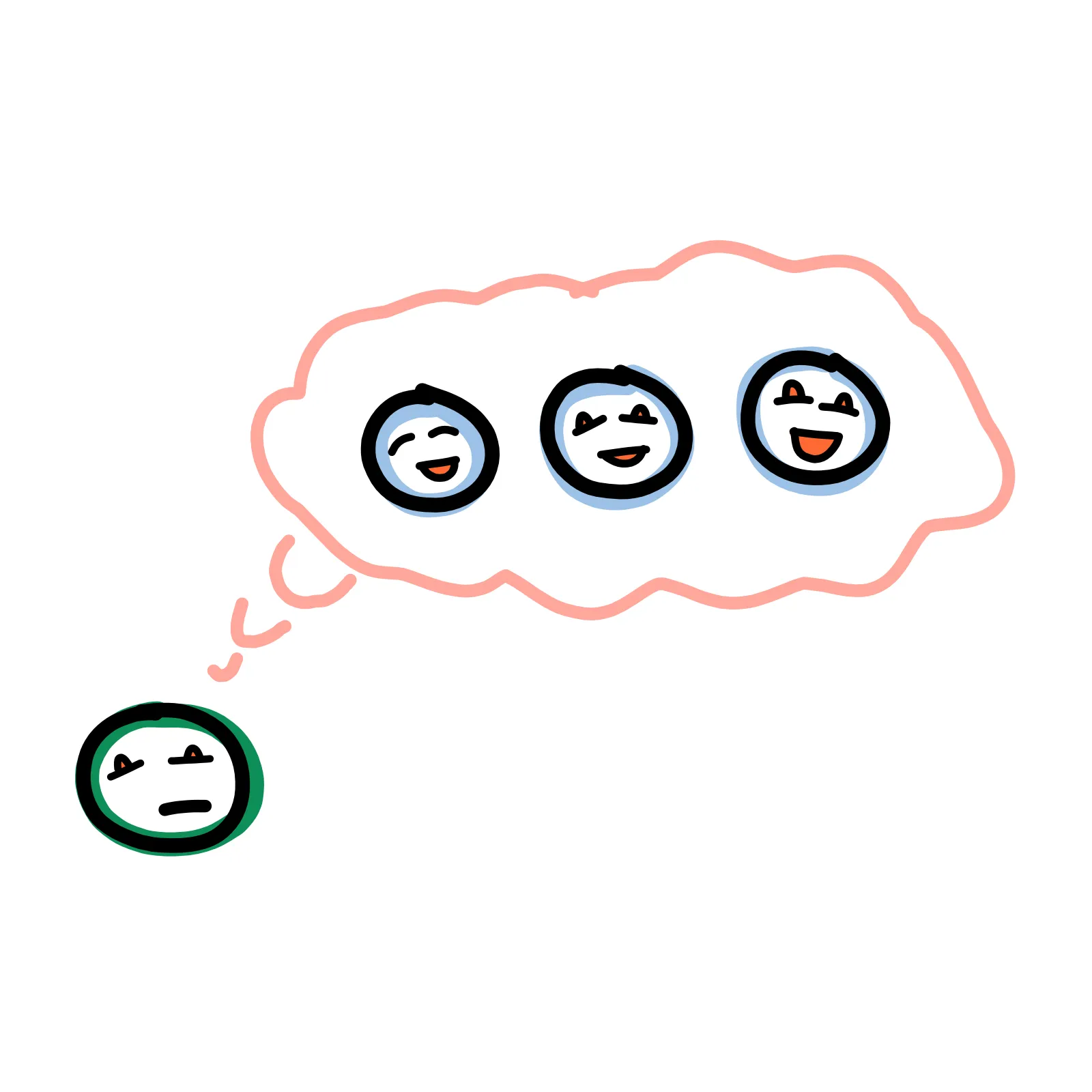
The anxious feeling that others are having rewarding experiences without you. Amplified by social media, FOMO drives impulsive decisions and chronic dissatisfaction.
Generational Amnesia
Phenomenon where knowledge or experiences are lost between generations due to incomplete or selective transmission, leading to a distorted or incomplete understanding of historical events or cultural practices.
Gezellig
A feeling of warmth, togetherness, and relaxed social comfort — applied to places, people, gatherings, or moments that make you feel at home among friends.
Giran
A Wiradjuri concept encompassing wind, change, and the feelings of fear and apprehension that accompany transformation.
Group Attribution Error
The tendency to believe either that the characteristics of an individual group member are reflective of the group as a whole, or that a group's decision outcome must reflect the preferences of individual group members.
Halcyon Days
A nostalgic reference to a past period remembered as happy, peaceful, and successful.
Hard-Easy Effect
Discriminability Effect · Difficulty Effect
The tendency to be overconfident on hard tasks and underconfident on easy ones. We overestimate our chances when things look difficult, and underestimate them when things look simple.
Hedonic Treadmill
Hedonic Adaptation
The tendency of humans to quickly return to a relatively stable level of happiness despite major positive or negative events or life changes.
Heterodox
Not conforming with accepted or orthodox standards or beliefs.
Hive Mind
Collective Consciousness · Group Mind
Group intelligence that emerges from the collective efforts of individuals and reflects a collective intelligence. Commonly seen in sociology, political science, biology, and technology.
Ho'oponopono
A traditional Hawaiian practice of reconciliation and forgiveness, centered on restoring harmony through mutual responsibility and letting go.
Homophily
The tendency of individuals to associate and bond with similar others, as in the expression "birds of a feather flock together".
Hostile Attribution Bias
Hostile Attribution of Intent
The tendency to interpret others' behaviors as having hostile intent, even when the behavior is ambiguous or benign.
Hurkle-Durkle
An 18th-century Scottish term for lounging in bed long after it's time to get up. A charming word for a universal guilty pleasure.
Hygge
Danish concept that refers to a feeling of coziness, warmth, and contentment, often achieved through simple pleasures and social interactions, and emphasizing a sense of comfort, security, and togetherness.
Ikigai
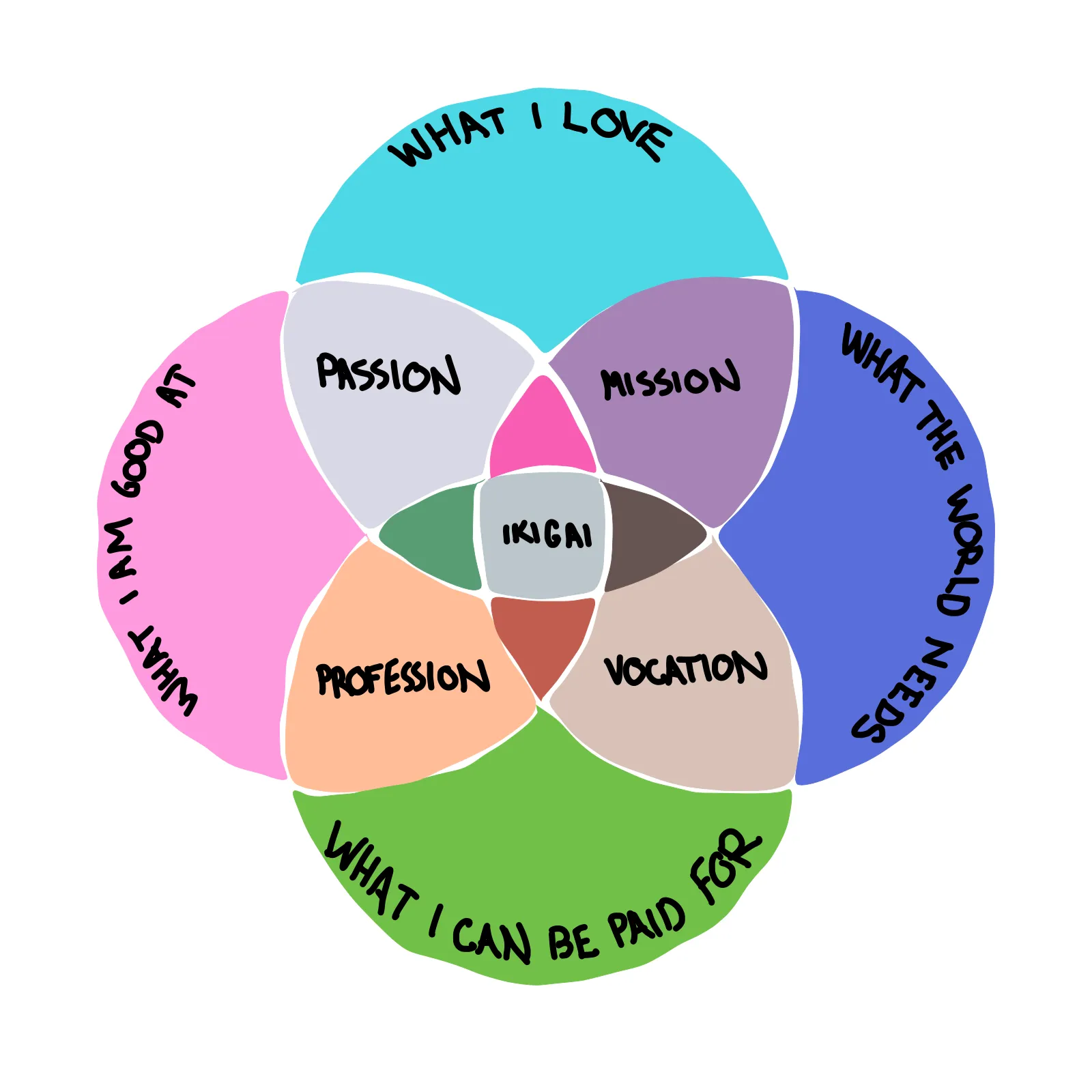
A sense of purpose and fulfillment in life — the feeling that one's daily existence has meaning, value, and direction.
Illusion of Asymmetric Insight
A cognitive bias whereby people perceive their knowledge of others to surpass other people's knowledge of them.
Illusion of Explanatory Depth
IOED
The notion that most people feel they understand the world with far greater detail, coherence, and depth than they really do.
Illusory Superiority
Self-Enhancement Effect · Lake Wobegon Effect · Better-Than-Average Effect · Above-Average Effect · Superiority Bias · Positive Illusions
A cognitive bias where people overestimate their own qualities and abilities relative to others — most people, for example, rate themselves as above-average drivers.
Inemuri
The Japanese concept of taking power naps at work, on the subway, and in other public places, where the practice is seen not as a sign of laziness, but of diligence — that one is working themselves to exhaustion.
Ingroup Bias
Ingroup-Outgroup Bias · Ingroup Favoritism · Intergroup Bias
The pattern of favoring people who belong to your own group while being skeptical or dismissive of outsiders, often unconsciously.
Jump the Shark
The moment when something that was once popular no longer warrants the attention it previously received, particularly when attempts at publicity only serve to highlight its irrelevance.
Kabuki
A classical Japanese dance-drama known for the stylization of its drama and for the elaborate makeup worn by some of its performers.
Kalsarikännit
A Finnish term for drinking at home alone in your underwear, with no intention of going out. Elevated to a national concept — no shame, just comfort.
Keeper of the Fabric
The person in a family or community who preserves its stories, traditions, and connections across generations — the living thread that holds collective memory together.
Koyaanisqatsi
A vision of modern life as fundamentally out of balance — humanity's relationship with technology and nature seen as one of escalating disharmony, made iconic by the 1982 experimental film of the same name.
Kulturbrille
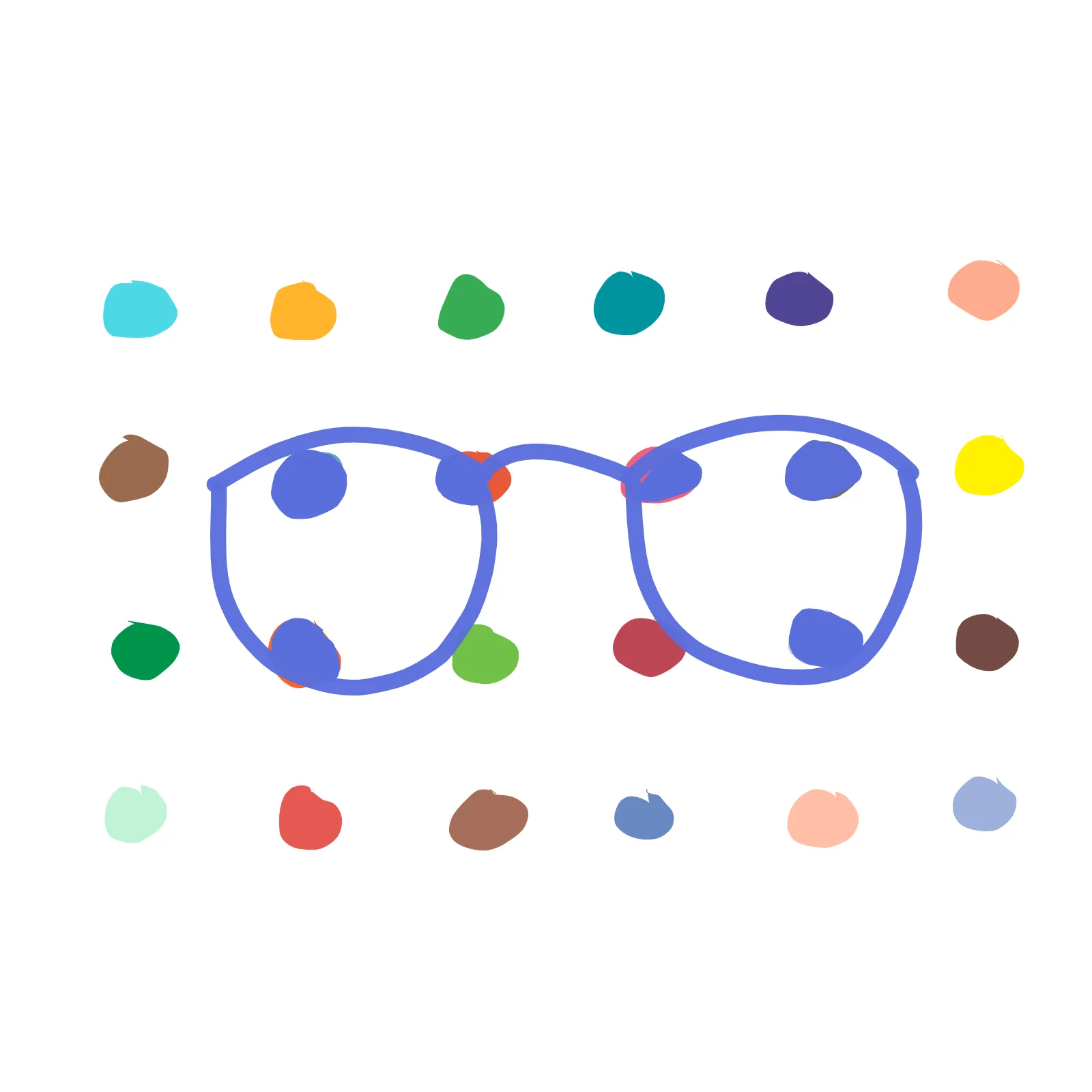
The invisible cultural lens through which every person perceives and judges the world — an inherent bias shaped by one's own upbringing, values, and social norms that remains largely unnoticed in daily life.
Lagom
A Swedish philosophy of moderation and balance — not too much, not too little, but just the right amount.
Law of Jante
Scandinavian social code that emphasizes humility, conformity, and egalitarianism, and discourages individualism and self-promotion.
Liminality
The quality of ambiguity that occurs in the middle of a rite of passage, where one no longer hold their pre-ritual status, but have not yet transitioned to the final state — a standing on the threshold.
Luck Surface Area
The phenomenon where when one engages in something they're excited about, they will naturally pull others into their orbit.
Magical Thinking
The belief that one's thoughts, wishes, or rituals can directly influence events in the world. From superstitions to prayer to "jinxing it" — the feeling that thinking something can make it so.
Majority Illusion
The phenomenon where individuals systematically overestimate the prevalence of their current state (neighborhood, local environment) over the global knowledge of the states of others, which may accelerate the spread of choices, risky behaviors, social contagions.
Maslow's Hierarchy of Needs
Maslow used the terms ‘physiological', ‘safety', ‘belongingness' and ‘love', ‘esteem', ‘self-actualization', and ‘self-transcendence' to describe the pattern that human motivations generally move through, in a ranked and building fashion.
Matilda Effect
A bias against acknowledging the achievements of those women scientists whose work is attributed to their male colleagues.
Misy Fa Lany
Malagasy expression, literally “it exists but it’s empty,” which is colloquially ‘out of stock,’ but also serves as a more philosophical notion of having the capacity and expectation to have something, but to not currently be in possession of that thing.
Naïve Cynicism
The tendency to assume other people are more selfishly motivated than they actually are. We expect bias in others while remaining blind to our own.
Naïve Realism
The human tendency to believe that we see the world around us objectively, and that people who disagree with us must be uninformed, irrational, or biased.
Neophilia
A strong attraction to novelty and new experiences. Neophiles thrive on change and are drawn to the unfamiliar — sometimes at the expense of depth or commitment.
Niksen
The practice of deliberately doing nothing — sitting idle, staring out a window, or letting your mind wander without any productive goal.
NIMBY - Not in My Back Yard

An attitude of opposition to development projects in one's community. While defended as Jane Jacobs-style neighborhood preservation, it can often be used to safeguard expensive real-estate, maintain "aesthetics", and perpetuate social inequality.
Noble Cause Corruption
Moral Credential Effect
Confidence in one's self-image tends to make one less worried about the consequences of subsequent immoral behavior, thus making one more likely to make immoral choices.
Noosphere
Noösphere
The sphere of thought encircling the earth that has emerged through evolution as a consequence of growth in complexity and consciousness — an evolution beyond the geosphere (inanimate matter) and the biosphere (biological life).
Omotenashi
A philosophy of hospitality centered on anticipating guests' needs and fulfilling them wholeheartedly, without pretense or expectation of anything in return.
Outgroup Homogeneity
Outgroup Homogeneity Effect · Outgroup Homogeneity Bias
The tendency for the perception of out-group members as more similar to one another than are in-group members, e.g. "they are alike; we are diverse."
Overconfidence Effect
Overconfidence Bias
A person's subjective confidence in their judgements are greater than the objective accuracy of those judgements.
Overton Window

Range of ideas tolerated in public discourse, according to current climates that will tend to exclude extreme perspectives.
Palavering
Palaver
Extended deliberation or negotiation aimed at reaching consensus through open dialogue, though now often used informally to mean excessive, drawn-out, or unnecessary talk and fuss.
Peter Principle
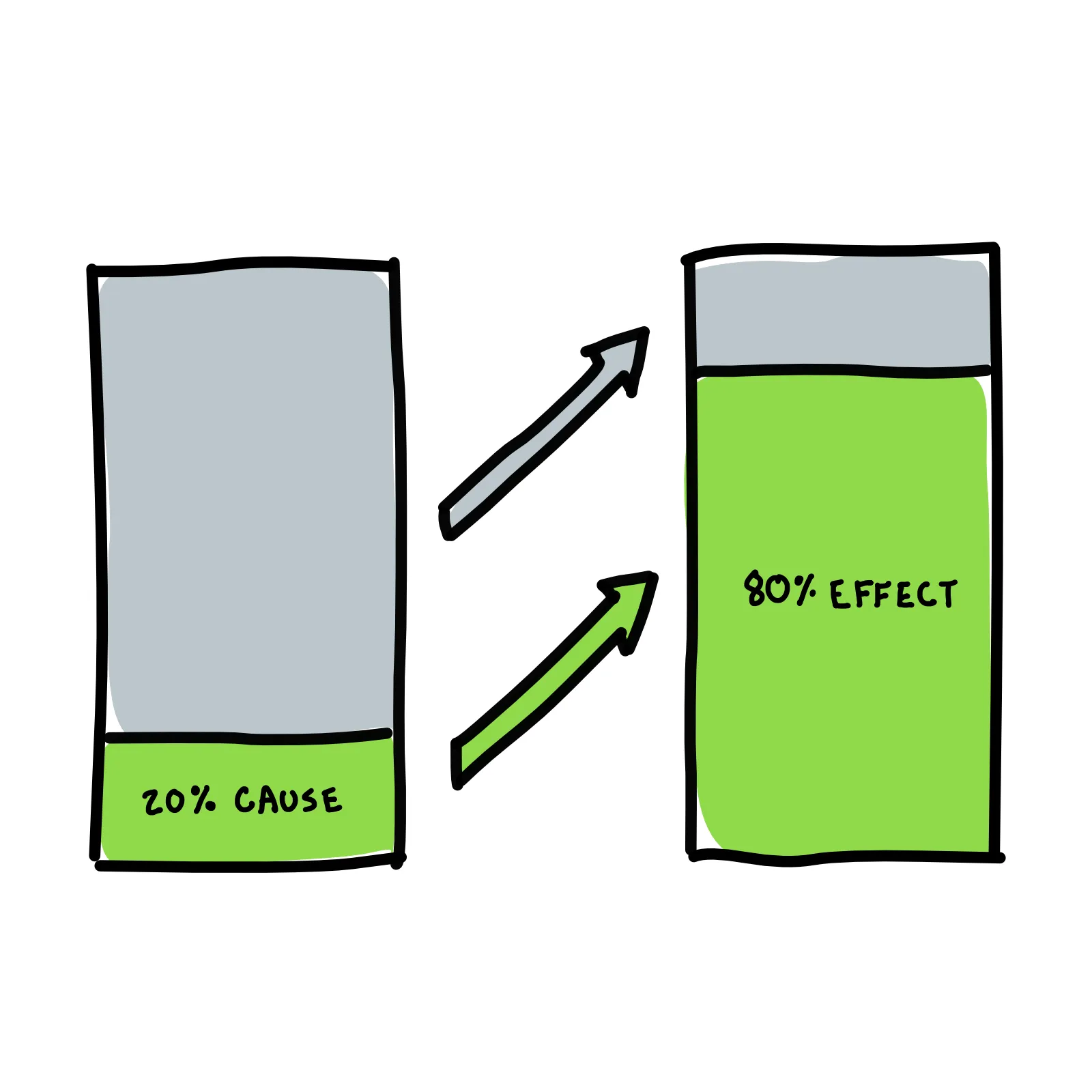
The idea that employees rise to the rank just beyond their competency, as they are evaluated on performance to their current role and not their intended one — at which point they cease to be promoted.
Physics Envy
A critique of disciplines like economics, sociology, or psychology for chasing the mathematical precision and predictive power of physics, often at the cost of oversimplifying their own subject matter.
Pizza Effect
Hermeneutical Feedback Loop · Re-enculturation
The phenomenon of elements of a culture being transformed or more fully embraced elsewhere, and then _re_-imported to the original culture with a nuance of the foreign culture's interpretation.
Population Thinking
An appeal towards a framework of thinking in terms of populations and variation among individuals as opposed to individuals as central representative types.
Potlatch
A ceremonial feast practiced by Indigenous peoples of the Pacific Northwest Coast involving elaborate gift-giving, oratory, and sometimes destruction of wealth, serving to redistribute resources and reinforce kinship obligations.
Prejudice
Bigotry · Tribalism
An affective feeling towards a person or group member based solely on that person's group membership.
Pygmalion Effect
Rosenthal Effect
The phenomenon where higher expectations placed on someone actually lead to improved performance. What you expect of people shapes what they become.
Pyt
Pyt Med Det
A Danish interjection — roughly "don't worry about it" or "oh well" — expressing the cultural practice of letting go of small frustrations and resetting one's attitude.
Quipu
Khipu · Talking Knots
Recording devices fashioned from strings and knots, historically used by a number of cultures particularly in the region of Andean South America.
Reciprocal Altruism
A behavior whereby an organism acts in a manner that temporarily reduces its fitness while increasing another organism's fitness, with the expectation that the other organism will act in a similar manner at a later time.
Restraint Bias
The tendency for people to overestimate their ability to control impulsive behavior. An inflated self-control belief may lead to greater exposure to temptation, and increased impulsiveness.
Revenge Bedtime Procrastination

Phenomenon in which people who don’t have much control over their daytime life refuse to sleep early in order to regain some sense of freedom during late night hours.
Ringelmann Effect
The tendency for individual members of a group to become increasingly less productive as the size of their group increases.
Sambaza
In Western Kenya, it means "to spread", and refers to marketing slogans for mobile connectivity, as well as to refer to the way money slips away, drip by drip, as friends and family ask for favors.
Self-Handicapping
A cognitive strategy by which people avoid effort in the hopes of keeping potential failure from hurting self-esteem.
Self-Serving Bias
Self-Serving Attribution Bias
The tendency to credit personal successes to one's own abilities and efforts while blaming failures on external circumstances — a pattern that protects and enhances self-esteem.
Shared Information Bias
Collective Information Sampling Bias
The tendency for group members to spend more time and energy discussing information that all members are already familiar with (i.e., shared information), and less time and energy discussing information that only some members are aware of (i.e., unshared information).
Sheepskin Effect
The hypothesis that the awarding of an educational degree would yield a higher income than the same amount of studying without possession of a certificate.
Shibboleth
Any custom or tradition, particularly a speech pattern, that distinguishes one group of people (an ingroup) from others (outgroups).
Sisu
A Finnish concept described as stoic determination, tenacity of purpose, grit, bravery, resilience, and hardiness.
Social Comparison Bias
Having feelings of dislike and competitiveness with someone that is seen physically, or mentally better than oneself.
Social Proof
Informational Social Influence
A psychological phenomenon where people copy the actions of others in an attempt to reflect correct behavior in a given situation.
Sphere of Influence
A spatial region or conceptual division where a state or organization has a level of cultural, economic, military, or political exclusivity, accommodating to the interests of powers outside the borders of the state that controls it.
Spotlight Effect
The phenomenon in which people tend to believe they are being noticed or are the center of attention more than they really are.
Stone Soup
Axe Soup · Button Soup · Nail Soup
A folk story in which hungry strangers convince the people of a town to each share a small amount of their food in order to make a meal that everyone enjoys (and whereby the inedible stone can be removed when the neighboring ingredients are sufficient to make an actual soup), and exists as a moral regarding the value of sharing.
Storytelling
The social and cultural activity of sharing stories, sometimes with improvisation, theatrics, or embellishment. Every culture has its own stories or narratives, which are shared as a means of entertainment, education, cultural preservation or instilling moral values.
Subjective Validation
Personal Validation Effect
A cognitive bias by which a person will consider a statement or another piece of information to be correct if it has any personal meaning or significance to them.
System Justification
A theory within social psychology where people have underlying needs, which vary from individual to individual, that can be satisfied by the defense and justification of the status quo, even when the system may be disadvantageous to certain people.
Third Rail
A metaphor for an issue that is controversial to the point of being "untouchable" that to broach the subject will cause damage. The metaphor comes from the high-voltage third rail in some electric railway systems.
Torschlusspanik
Gate-Closing Panic
German compound word translated as "gate-close-panic", describing a fear that time is running out to do major life things.
Trait Ascription Bias
The tendency for people to view themselves as relatively variable in terms of personality, behavior and mood while viewing others as much more predictable in their personal traits across different situations.
Tsukumogami
Household objects — tools, utensils, instruments — believed to gain a spirit or consciousness after reaching great age, often becoming mischievous or vengeful once animated.
Tsundoku

The habit of acquiring books and letting them pile up unread. Not quite hoarding — more like optimistic collecting with good intentions.
Typecasting
Pigeonholing
The tendency to 'lock' individuals into narrowly defined, safe, predictable roles based on their past performance rather than their potential in new and/or different roles.
Ubuntu
A Southern African philosophy meaning "I am because we are" — the belief that our humanity is bound up in the humanity of others.
Ultimate Attribution Error
A group-level attribution error where one explains an outgroups' negative behavior as flaws in their personality, and positive behavior as a result of chance or circumstance, where conversely they explain an *ingroups'* negative behavior as a result of chance or circumstance, and positive behavior as strengths in their personality.
Vergangenheitsbewältigung
A public debate within a country on a problematic period of its recent history. Most often associated with World War II and the Holocaust.
Women-Are-Wonderful Effect
The phenomenon found in psychological and sociological research which suggests that people associate more positive attributes with women compared to men.
Zeitgeist
The concept of an invisible agent or force dominating the characteristics of a given epoch in world history.