Work & Organizations
Attribution Theory
The study of how people explain the causes of behavior and events — whether they credit internal traits or external circumstances.
Bad Product Fallacy
A product development fallacy where personal use cases and opinions are conflated with predictions of a product’s future success.
Barriers to Entry
A cost that must be incurred by a new entrant into a market that incumbents don't or haven't had to incur.
Best Alternative to a Negotiated Agreement (BATNA)
The best expected outcome for a party when/if negotiations fail. Must be considered by all parties during negotiations as a baseline.
Bikeshedding
Bike-Shed Effect · Parkinson's Law of Triviality
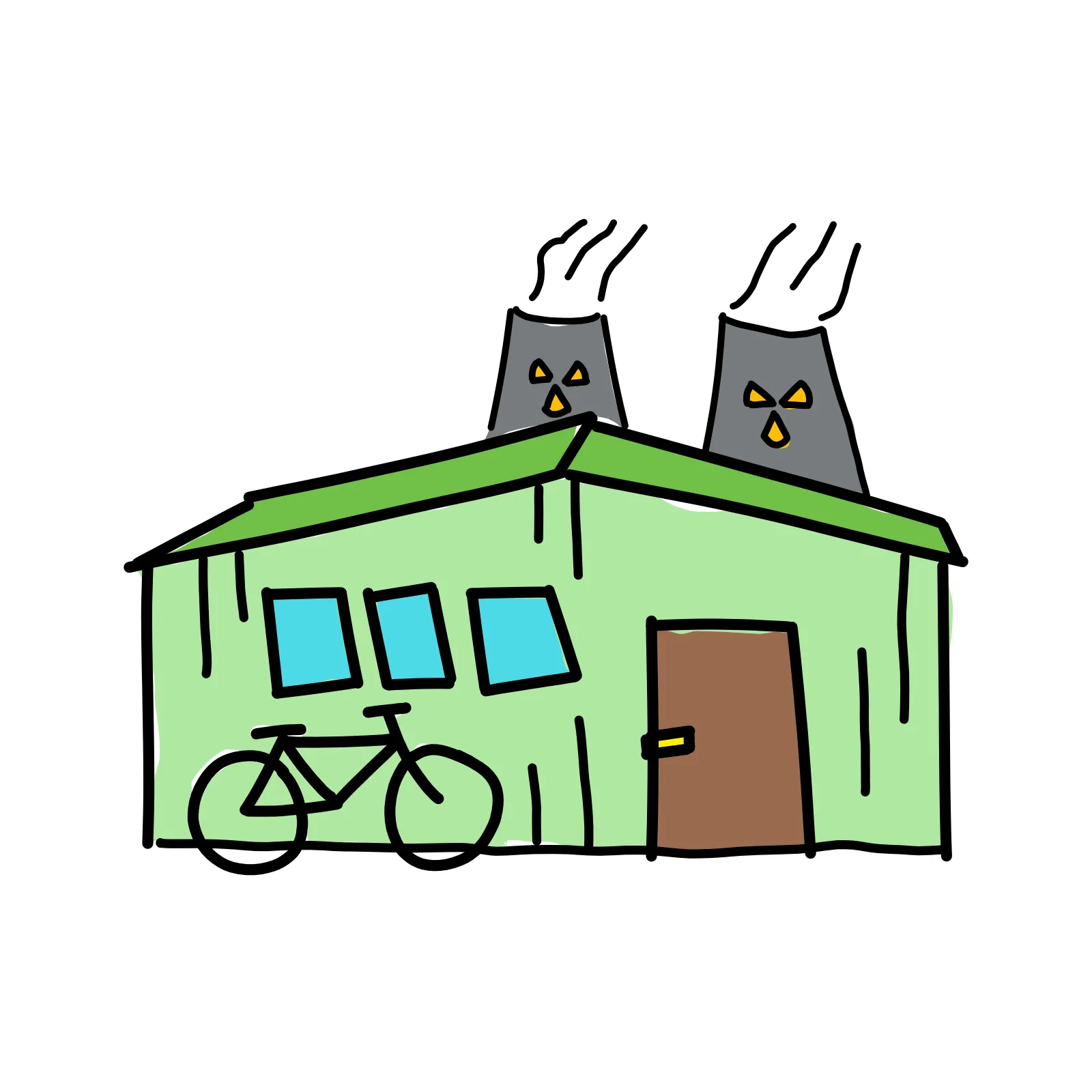
The tendency to give disproportionate weight to trivial issues of a larger or more complex project. In other words, prioritizing something easy to grasp or and/or is debatable.
Busy Waiting
Hurry Up and Wait
Wasting time and resources or consuming processing units while waiting for something to happen.
Cascading Failure
A process in a system of interconnected parts in which the failure of one or few parts can trigger the failure of other parts and so on. Such a failure may happen in many types of systems, including power transmission, computer networking, finance, human body systems, and transportation systems.
Cash Cow
A product or business unit that reliably generates profit with little investment. The danger is that its success breeds complacency about innovation.
Conway's Law
The Mirroring Hypothesis · Isomorphism
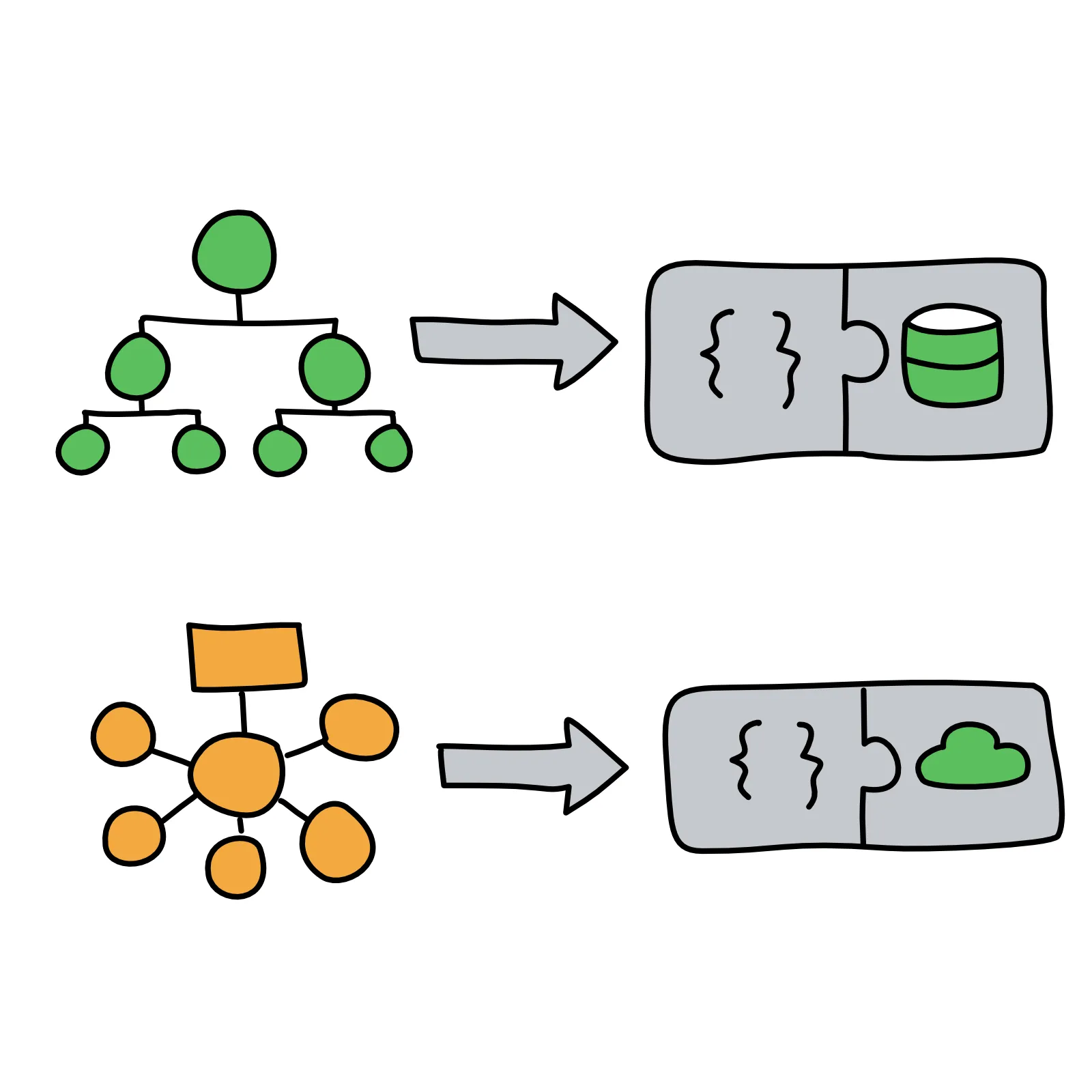
Conway's Law states that organizations design systems that mirror their own communication structures. In other words, the way teams are organized and talk to each other will inevitably shape the architecture of whatever they build.
Creative Destruction
A term for the process of an industrial cycle that revolutionizes the economic structure with periodic extinction of industries as new industries emerge to meet societal needs.
Curly's Law
A principle of software design and life: focus on doing one thing well. Derived from the movie City Slickers, it argues that clarity comes from singular focus.
Death March
A project whose participants believe it is destined to fail, yet are compelled to continue — often with unsustainable overwork and leadership in denial about the outcome.
Deep Work
The ability to focus without distraction on a cognitively demanding task, allowing one to quickly master complicated information and produce better results in less time.
Disposition Effect
The tendency for investors to sell winning assets too early and hold losing assets too long — driven by loss aversion and the desire to avoid locking in a loss.
Exit Strategy
A strategic means of leaving one's current situation, either after a predetermined objective has been achieved, or as a strategy to mitigate failure.
Exponential Backoff
An algorithm that uses feedback to multiplicatively decrease the rate of some process, in order to gradually find an acceptable rate.
Field of Dreams Fallacy

The mistaken belief that simply creating a product or service will automatically attract customers, without considering marketing, distribution, timing, or market demand — summarized by the misquoted mantra, "if you build it, they will come."
Foot-in-the-Door Technique
A tactic that aims at getting a party to agree to a large request by having them agree to a modest request first, and then building upon that small agreement to larger agreements justified by that initial trust.
Gate's Law
The adage from Bill Gates that, "Most people overestimate what they can do in one year and underestimate what they can do in ten years."
Gold Plating
Continuing to work on a task or project well past the point at which extra effort is not adding value.
Headwinds Tailwinds Asymmetry
The tendency for benefits and resources to be simply enjoyed and ignored (headwinds), whereas, unequally, barriers and hindrances command attention as something to overcome (tailwinds).
Hedgehogs Vs. Foxes
A parable of two differing cognitive style — hedgehogs are specialized and drill deeply into a given area where foxes are generalists and prioritize invented solutions.
Hiding Hand Principle
The idea that when a person decides to take on a project, the ignorance of future obstacles allows the person to rationally choose to undertake the project, and once it is underway the person will creatively overcome the obstacles because it is too late to abandon the project.
Hofstadter's Law
The axiom that "it always takes longer than you expect, even when you take into account Hofstadter's Law."
Human-Centered Design
User-Centered Design · Usability
A framework of processes (not restricted to interfaces or technologies) in which usability goals, user characteristics, environment, tasks and workflow of a product, service, and process are given attention at each stage of the design process — where the focus is on user experience and outcomes as opposed to feature specifications alone.
Inemuri
The Japanese concept of taking power naps at work, on the subway, and in other public places, where the practice is seen not as a sign of laziness, but of diligence — that one is working themselves to exhaustion.
Instrumental Conditioning
Operant Conditioning
A learning process through which the strength of a behavior is modified by reinforcement or punishment.
Invented Here
Not Invented There · Proudly Found Elsewhere
The tendency towards dismissing any innovation or less-than-trivial solution originating from inside an organization — typically because of lack of confidence in the staff.
Iteration
The repetition of a process in order to generate a sequence of outcomes — the outcome of each iteration is then the starting point of the next iteration.
Joy's Law
An aphorism that "no matter who you are, most of the smartest people work for someone else."
Kaizen
A management philosophy built on continuous, incremental improvement — making small, frequent adjustments across every aspect of an operation to steadily raise efficiency, quality, and morale.
Kanban
A method to manage and improve work across systems, where work tasks are typically visualized to give participants a view of progress and process. This approach aims to manage work by balancing demands with available capacity.
Kanter's Law
The observation that every major project hits a messy middle phase where progress stalls and doubt creeps in. Perseverance through this valley is what separates success from abandonment.
KISS
A design principle that most systems work best when kept simple rather than made complex. Simplicity should be a key goal, and unnecessary complexity should be avoided.
Last Responsible Moment
LRM
Decision-making principle that suggests that the best time to make a decision is when the maximum amount of information is available, but not so late that the decision cannot be made in time to meet its intended purpose.
Loss-Leader
A pricing strategy where a product is sold at a price below its market cost to stimulate other sales of more profitable goods or services.
Lottery Factor
Bus Factor
Aa measurement of the risk resulting from information and capabilities being lost or not being shared among team members. From the phrase, "in case they get hit by a bus."
Makers Vs. Manager's Schedule
Two divergent scheduling ideologies — the maker's schedule is one that allows for deep, uninterrupted, creative work, whereas the manager's schedule accounts for meetings, immediate tasks, and changing priorities.
Management by Objectives
MBO
A management approach focused on setting specific, measurable goals for employees. Effective for clarity, but risks reducing complex work to what's easily quantified.
Micromanagement
A style of management characterized by excessive observation, supervision, or other hands-on involvement from management.
Moonshot
Moon Shot
An ambitious, exploratory and ground-breaking project undertaken without any expectation of near-term profitability or benefit and also, perhaps, without a full investigation of potential risks and benefits.
Murphy's Law
Sod's Law · Finagle's Law
The observation that if something can go wrong, it eventually will. A reminder to design for failure and plan for the unexpected rather than assuming the best case.
Mushroom Management
Pseudo Analysis · Blind Development
A management concept where workers are not given insight to the processes, priorities, or even the purpose of the company, and are simply given tasks to accomplish without context. The term itself alludes to mushroom cultivation of "being kept in the dark and fed bullshit."
Organizational Debt
The interest companies pay when their structure, policies, and culture stay fixed as the world changes — i.e. the accumulation of non-investment towards long-term planning.
Ostrich Effect
In behavioral finance, the attempt made by investors to avoid negative financial information.
Parachute Paradigm
Situation where a common belief or practice is not properly scrutinized or tested because it is widely accepted and assumed to be effective, often leading to ineffective or even harmful outcomes.
Parkinson's Law
The observation that work expands to fill the time available for its completion. Give someone a week for a two-hour task, and it will somehow take a week.
Planning Fallacy
A phenomenon in which predictions about how much time will be needed to complete a future task display an optimism bias and underestimate the time needed.
Poison Pill
Shareholder Rights Plan
In business, a type of defensive tactic used by a corporation's board of directors against a takeover. Typically, such a plan gives shareholders the right to buy more shares at a discount if one shareholder buys a certain percentage or more of the company's shares.
Poka-Yoke
Mistake-Proofing · Inadvertent Error Prevention
Mechanism built into a process that helps an equipment operator avoid mistakes, thereby eliminating product defects by preventing, correcting, or drawing attention to human errors as they occur.
Pomodoro Technique
Time management technique that uses a timer to break work down to regular intervals, typically 25 minutes, separated by short breaks.
Porter's Five Forces Analysis
Framework for analyzing business competition, consisting of 'horizontal' competition: threat of substitutes, threat of rivals, and threat of new entrants; and 'vertical' competition: bargaining power of suppliers, and bargaining power of customers.
Positive Feedback
A process that occurs in a feedback loop in which the effects of a small disturbance on a system include an increase in the magnitude of the perturbation.
Possibility Space
The range of all possible outcomes in a given scenario, which helps to illuminate not only likely outcomes, but patterns in less common outcomes as well.
Premortem
Pre-Mortem
A managerial strategy in which a project team imagines that a project or organization has failed, and then works backward to determine what potentially could lead to the failure of the project or organization.
Priority Inversion
A scenario in scheduling in which a high priority task is indirectly preempted by a lower priority task effectively inverting the relative priorities of the two tasks.
Prototyping
An early sample, model, or release of a product built to test a concept or process or to act as a thing to be replicated or learned from.
Pyramid Scam
Pyramid Scheme
A business model that recruits members via a promise of payments or services for enrolling others into the same scheme (rather than supplying investments or sale of products or services). As recruiting multiplies, recruiting becomes quickly impossible, and most members are unable to profit — making them ultimately unsustainable (and often illegal).
Reinventing the Wheel
Failing to adopt an existing solution and instead adopting or building a custom solution which performs the same function. "Reinventing the Square Wheel" refers to to the same failure, only where the solution performs worse than the existing solution.
Scenario and Contingency Planning
Scenario Planning
A structured way for organizations to think about the future, typically by developing a small number of scenarios—stories about how the future might unfold and how this might affect an issue that confronts them, which include risks and opportunities.
Scope Creep
Mission Creep · Requirement Creep · Feature Creep · Kitchen Sink Syndrome
The tendency for the continuous growth, development, and addition of new features to a project's scope of features or requirements — particularly after the original requirements have been drafted and accepted.
Seagull Management
Management in which managers only interact with employees when a problem arises — as in "fly in, make a lot of noise, dump on everyone, do not solve the problem, fly out."
Second-Order Thinking
Second-Level Thinking
The process of estimating and considering the implications of impacts of a first-order effect (initial effects).
Shirky Principle
The notion that institutions will try to preserve the problem to which they are the solution.
Sisyphean Task
A laborious, seemingly endless effort that ultimately leads nowhere — named after the mythological king condemned to roll a boulder uphill for eternity.
Stock–Sanford Corollary
A humorous corollary to Parkinson's Law: "If you wait until the last minute, it only takes a minute to do." A tongue-in-cheek defense of procrastination.
Stovepipes Vs. Silos
Organizational structures where stovepipes and silos are isolated or semi-isolated teams where communications take place up and down the hierarchy, as opposed to directly with other teams across the organization.
Strategy Tax
The "tax" incurred as a result of products developed inside a company that have to accept constraints which go against competitiveness, or might displease users — in order to further the cause of another product.
Technical Debt
Tech Debt · Code Debt · Design Debt
In computer programming, the extra development work (debt) that arises when code that is easy to implement in the short run is used, instead of applying the best overall solution.
Vendor Lock-In
When a system becomes so dependent on a specific vendor's products that switching away is prohibitively expensive or difficult. Convenience now, captivity later.
Vitality Curve
Stack Ranking · Forced Ranking · Rank and Yank
A performance management practice that calls for individuals to be ranked or rated against their coworkers.
Yak Shaving

The process of performing a series of tasks (often nested inside completing other tasks, like side quests) to accomplish a goal, each of which seems necessary in context but becomes less and less linked to the original goal.
Zeigarnik Effect
The ability of incomplete tasks to dominate attention, even after one has committed leave them unresolved for the time being.
Zero-Risk Bias
A tendency to prefer the complete elimination of a risk even when alternative options produce a greater reduction in risk (overall). For example, war against terrorism as opposed to reducing the risk of traffic accidents or gun violence.