Non-English Terms
Eierlegende-Wollmilchsau
A German term for an all-in-one solution that tries to do everything — the mythical "egg-laying wool milk sow." In practice, such solutions rarely exist.
elda för kråkorna
Putting effort into something that goes unnoticed or unappreciated — like heating a room with the windows wide open, where only the crows outside benefit.
Esprit De L'escalier
Staircase Wit
French term ("staircase wit") describing the feeling one has when thinking of the perfect reply — but a moment too late when one is already headed away from the moment.
Fika
A ritual of pausing for coffee, a treat, and unhurried conversation. More than a simple break — it is about slowing down and connecting with the people around you.
Gezellig
A feeling of warmth, togetherness, and relaxed social comfort — applied to places, people, gatherings, or moments that make you feel at home among friends.
Giran
A Wiradjuri concept encompassing wind, change, and the feelings of fear and apprehension that accompany transformation.
Ho'oponopono
A traditional Hawaiian practice of reconciliation and forgiveness, centered on restoring harmony through mutual responsibility and letting go.
Hygge
Danish concept that refers to a feeling of coziness, warmth, and contentment, often achieved through simple pleasures and social interactions, and emphasizing a sense of comfort, security, and togetherness.
Ikigai
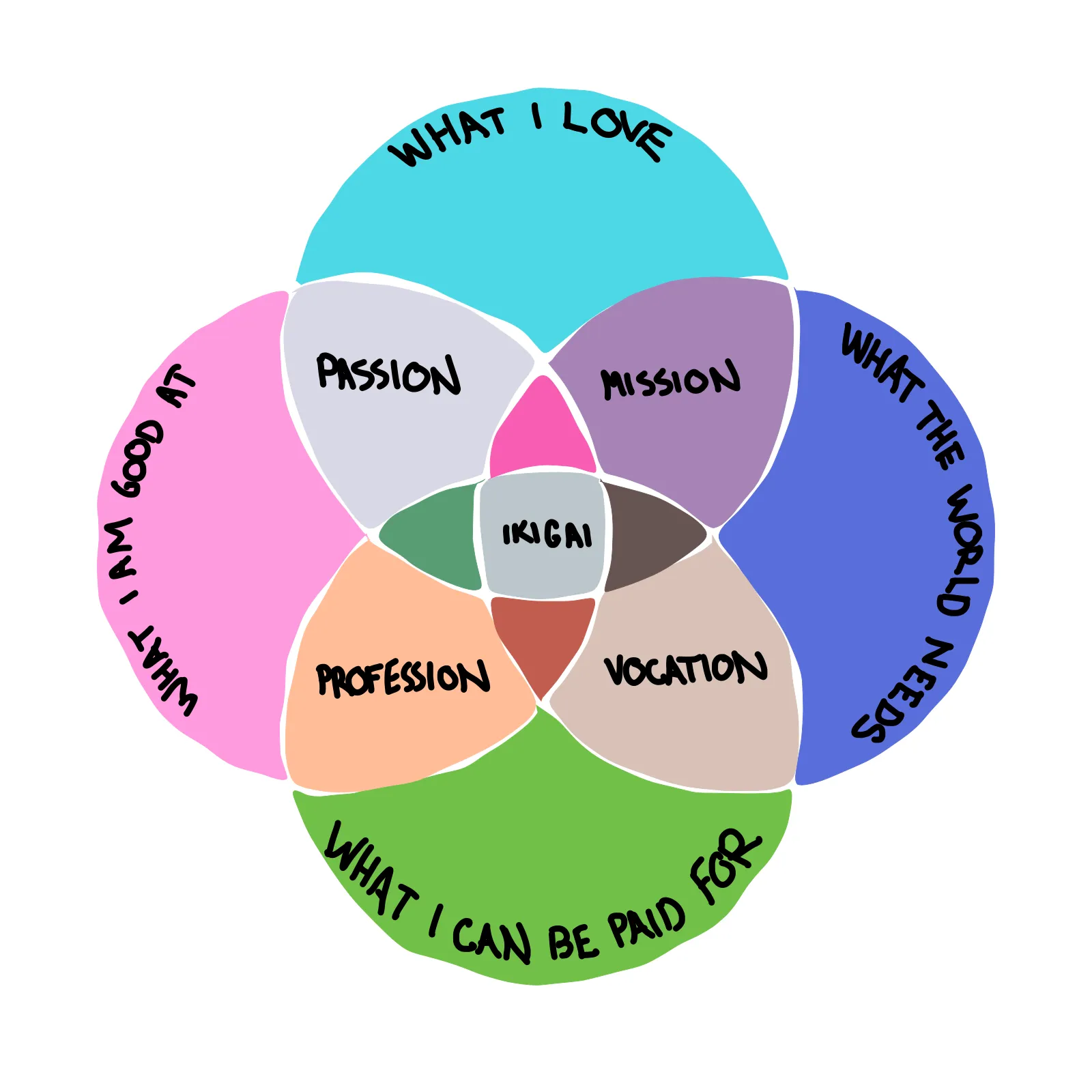
A sense of purpose and fulfillment in life — the feeling that one's daily existence has meaning, value, and direction.
Inemuri
The Japanese concept of taking power naps at work, on the subway, and in other public places, where the practice is seen not as a sign of laziness, but of diligence — that one is working themselves to exhaustion.
Innsaei
Icelandic term for 'intuition', but can also mean 'the sea within' and more generally conveys a sense of inner awareness and ability to empathize with others from within one's own self.
Jugaad
A non-conventional solution or hack to a problem — often both frugal in nature and demonstrating a degree of creativity.
Kabuki
A classical Japanese dance-drama known for the stylization of its drama and for the elaborate makeup worn by some of its performers.
Kaizen
A management philosophy built on continuous, incremental improvement — making small, frequent adjustments across every aspect of an operation to steadily raise efficiency, quality, and morale.
Kalsarikännit
A Finnish term for drinking at home alone in your underwear, with no intention of going out. Elevated to a national concept — no shame, just comfort.
Kintsugi
Golden Repair · Kintsukuroi
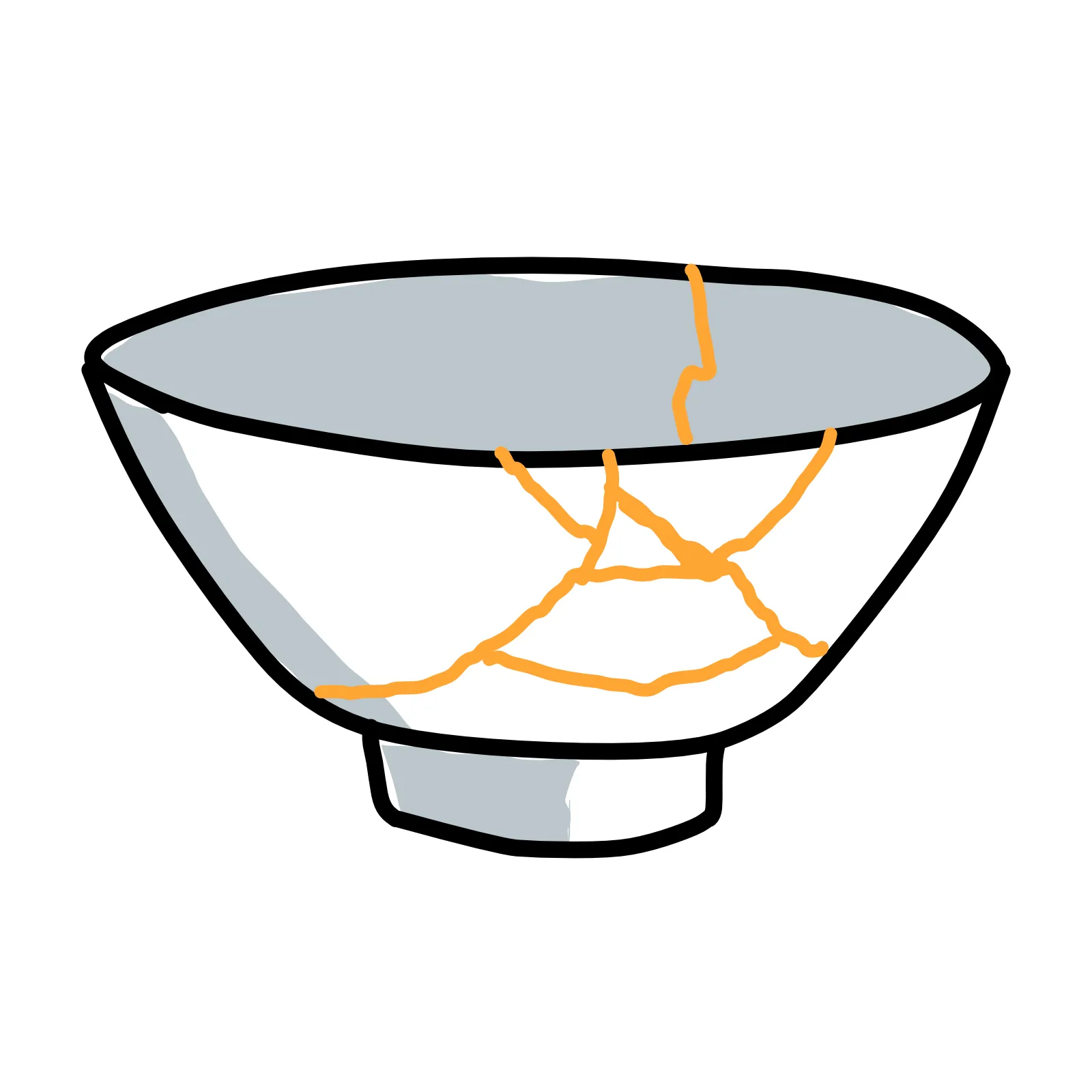
Repairing broken pottery with lacquer mixed with powdered gold or silver, treating each crack as part of the object's history rather than something to hide. The flaw becomes the feature.
Koyaanisqatsi
A vision of modern life as fundamentally out of balance — humanity's relationship with technology and nature seen as one of escalating disharmony, made iconic by the 1982 experimental film of the same name.
Lagom
A Swedish philosophy of moderation and balance — not too much, not too little, but just the right amount.
Law of Jante
Scandinavian social code that emphasizes humility, conformity, and egalitarianism, and discourages individualism and self-promotion.
Matutolypea
A state of extreme funk/irritability after waking up — i.e. getting up on the wrong side of the bed.
Misy Fa Lany
Malagasy expression, literally “it exists but it’s empty,” which is colloquially ‘out of stock,’ but also serves as a more philosophical notion of having the capacity and expectation to have something, but to not currently be in possession of that thing.
Niksen
The practice of deliberately doing nothing — sitting idle, staring out a window, or letting your mind wander without any productive goal.
Omotenashi
A philosophy of hospitality centered on anticipating guests' needs and fulfilling them wholeheartedly, without pretense or expectation of anything in return.
Pyt
Pyt Med Det
A Danish interjection — roughly "don't worry about it" or "oh well" — expressing the cultural practice of letting go of small frustrations and resetting one's attitude.
Sambaza
In Western Kenya, it means "to spread", and refers to marketing slogans for mobile connectivity, as well as to refer to the way money slips away, drip by drip, as friends and family ask for favors.
Saudade
A deep, bittersweet longing for something or someone absent or lost — not just missing them, but feeling the lingering presence of what is no longer there.
Shikantaza
Just Sitting · Silent Illumination
A Zen Buddhist practice of "just sitting" — sitting without technique, goal, or object of concentration. Not meditation in the usual sense, but a complete presence without striving.
Sisu
A Finnish concept described as stoic determination, tenacity of purpose, grit, bravery, resilience, and hardiness.
Torschlusspanik
Gate-Closing Panic
German compound word translated as "gate-close-panic", describing a fear that time is running out to do major life things.
Tsukumogami
Household objects — tools, utensils, instruments — believed to gain a spirit or consciousness after reaching great age, often becoming mischievous or vengeful once animated.
Tsundoku

The habit of acquiring books and letting them pile up unread. Not quite hoarding — more like optimistic collecting with good intentions.
Ubuntu
A Southern African philosophy meaning "I am because we are" — the belief that our humanity is bound up in the humanity of others.
Umwelt
An organism's subjective model of the world, shaped by the capabilities of its particular sensory organs and perceptual systems. Though organisms may share the same physical environment, each inhabits a distinct perceptual reality.
Urawaza
Japanese term that refers to a clever or unconventional solution or hack that solves a problem in a simple and efficient way, often using everyday items or resources.
Vergangenheitsbewältigung
A public debate within a country on a problematic period of its recent history. Most often associated with World War II and the Holocaust.
Viparinama-dukkha
The Buddhist concept of "the suffering of change" — the unease that comes from losing what's familiar, even when the change is positive. A new city, a child leaving home, a shifted routine — impermanence touches everything.
Wabi-Sabi
The Japanese concept of a worldview centered on the acceptance of transience and imperfection.