Kintsugi
Golden Repair · Kintsukuroi
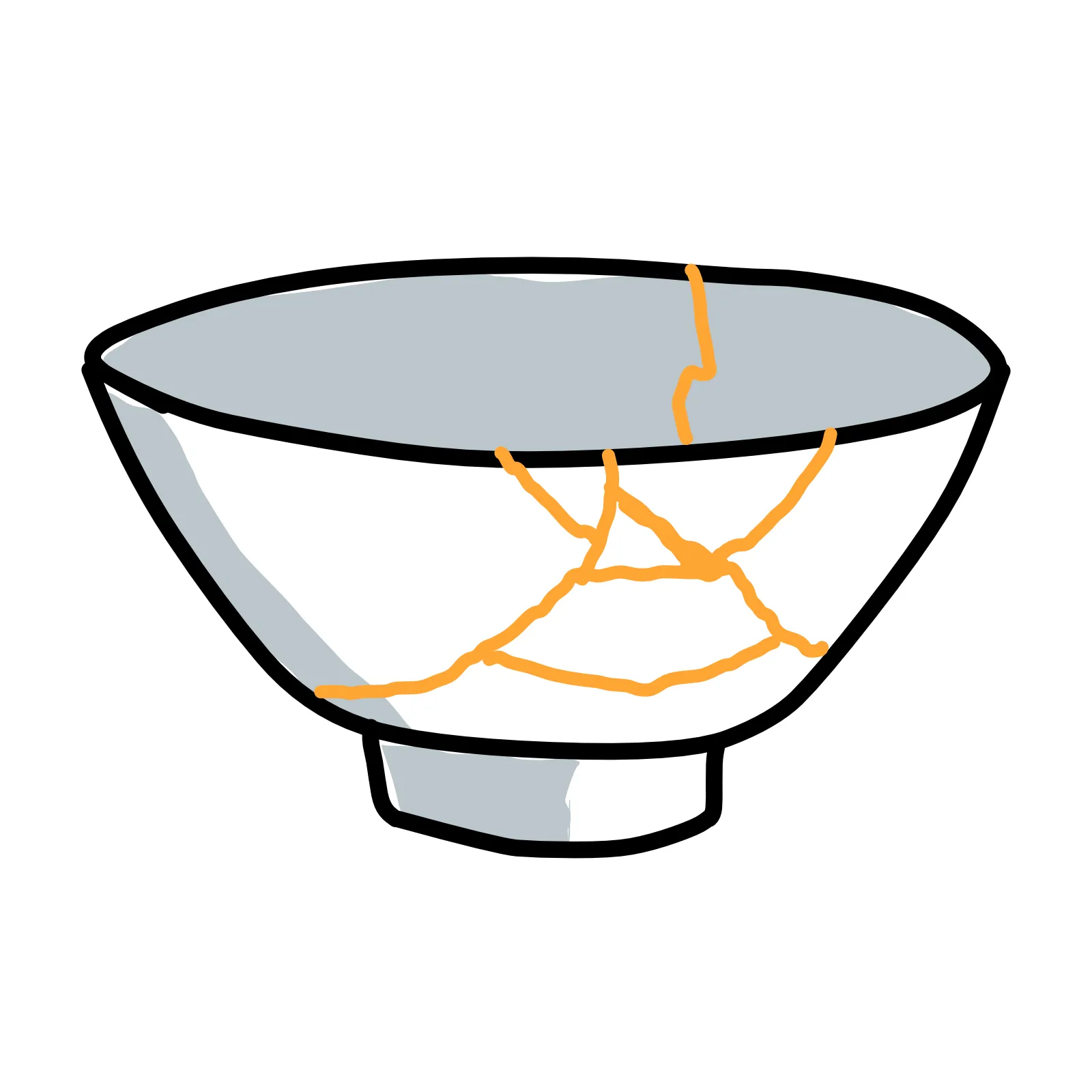
Repairing broken pottery with lacquer mixed with powdered gold or silver, treating each crack as part of the object's history rather than something to hide. The flaw becomes the feature.
Origin
From the Japanese kintsugi ("golden seams") or kintsukuroi ("golden repair"). Legend traces it to the late 15th century, when shogun Ashikaga Yoshimasa sent a broken tea bowl to China for repair and was displeased by the ugly metal staples he received back. The practice became widespread during the 16th–17th centuries, closely linked to the wabi-sabi aesthetic of finding beauty in imperfection.
Everyday Use
There are objects and systems all around us that bear the seams and stitches of a world that is constantly in repair — from sewn on buttons to duct taped bookshelves to the scars we have from our wilder youths. It's not that 'what doesn't kill us makes us stronger', but rather that our objects and selves are made more unique, resilient, and delightful through our care. Even if it's as simple as an Oreo.