Design
Accessibility
Designing products, environments, and services so they can be used by people of all abilities. Good accessibility benefits everyone, not just those with disabilities.
Aesthetic–usability Effect
The tendency for users to perceive attractive designs as more usable, even when they're not. Visual appeal creates a halo that makes people more forgiving of flaws.
Affordances
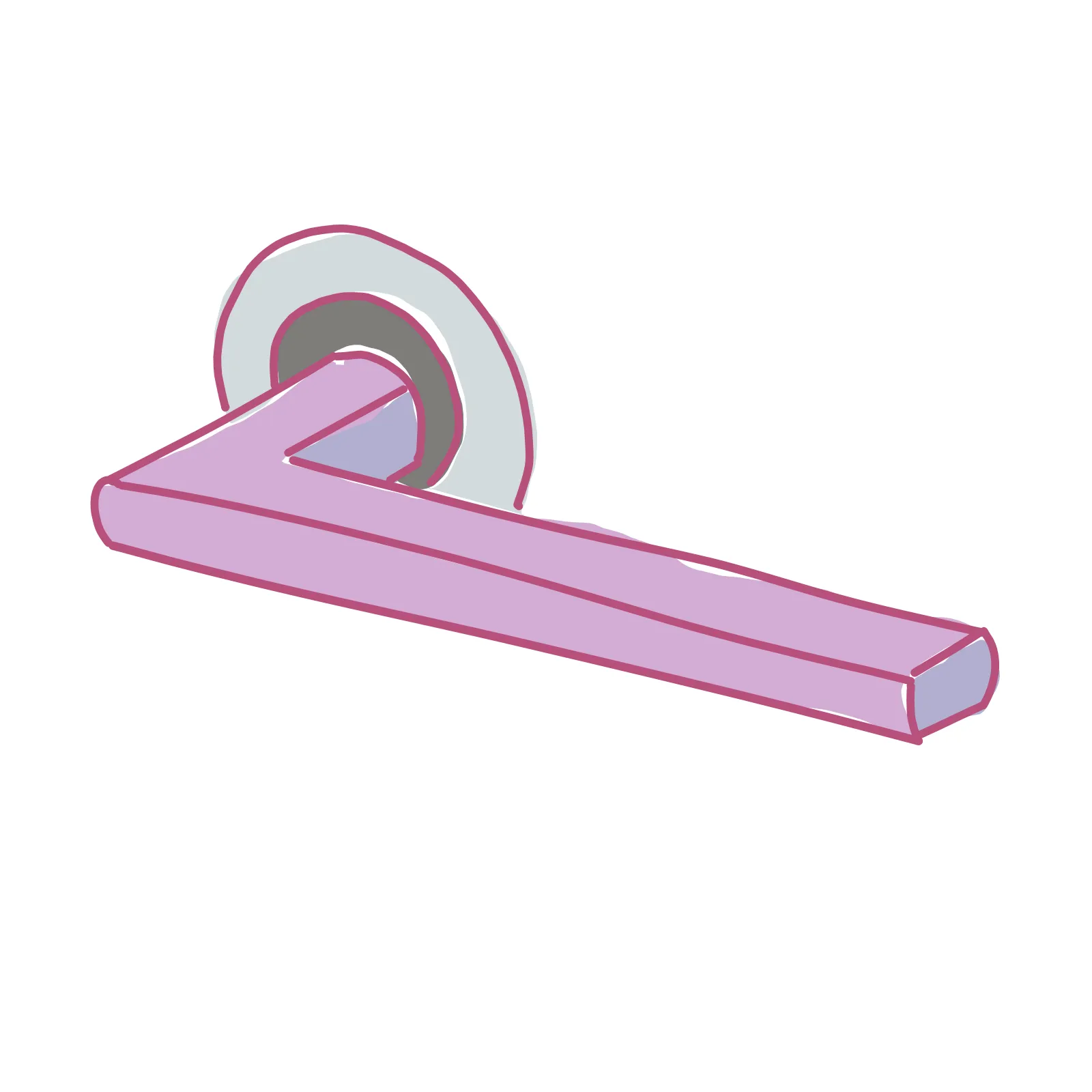
The properties of an object or environment that indicate to a user what actions are possible — a button that looks pushable, a handle that looks pullable. Well-designed affordances make the correct interaction intuitive without labels or instructions.
Anti-Pattern
A common response to a recurring problem that is usually ineffective and risks being highly counterproductive.
Cathedral Effect
The finding that high ceilings promote abstract, creative thinking, while low ceilings encourage detail-oriented focus. Physical space shapes mental space.
Common Fate
A Gestalt principle that stimulus elements are likely to be perceived as a unit if they move together.
Contour Bias
In design and psychology, the tendency to prefer contoured or rounded objects, where sharp angles and pointed features evoke a threat response.
Creative Capacity-Building
Design Thinking
An umbrella term for the cognitive, strategic and practical processes by which design concepts (proposals for new products, buildings, machines, etc.) are developed around cooperative efforts in general, and likely a human-centered design process more specifically.
Dark Pattern
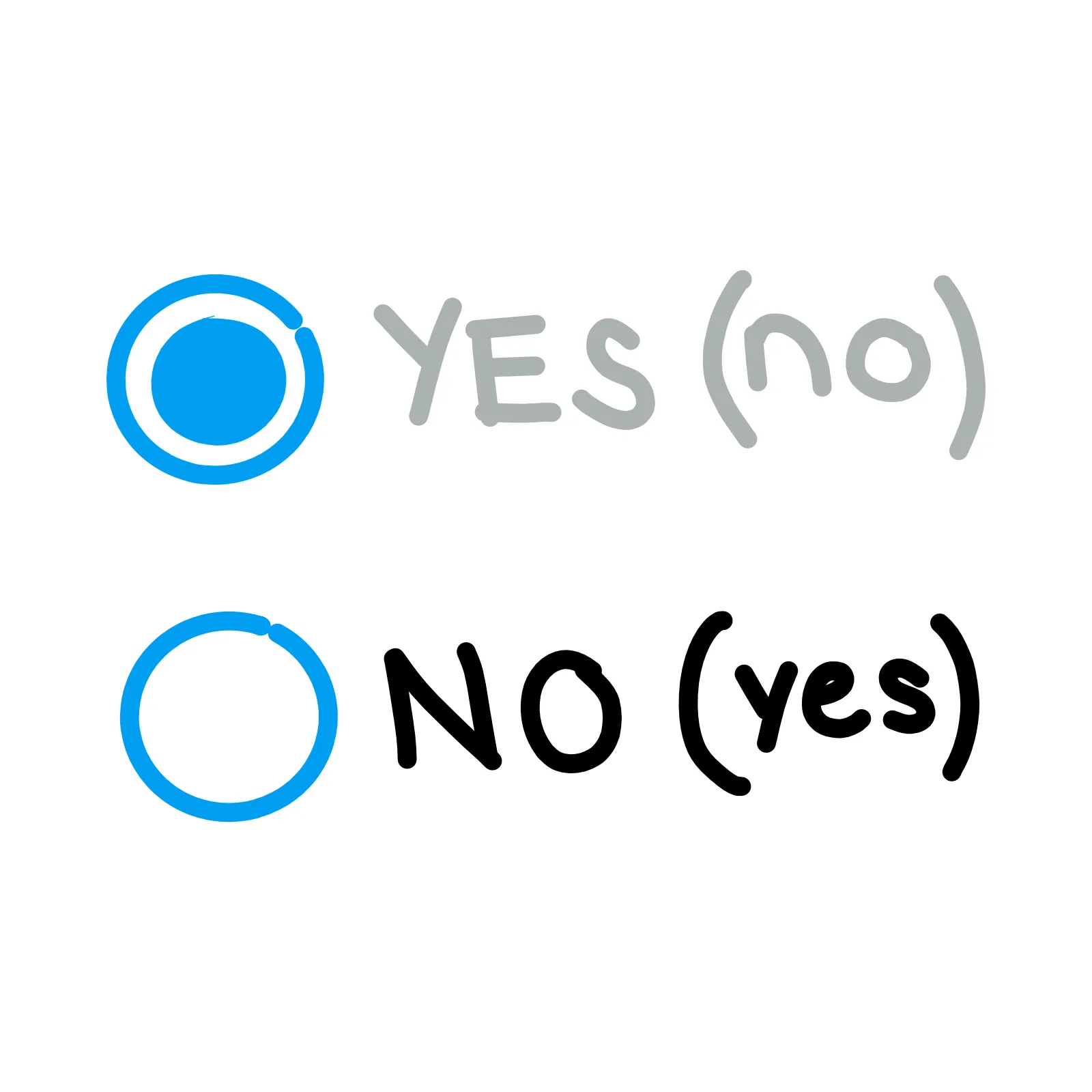
A user interface that has been intentionally designed to trick or deceive user activity, wherein they purchase goods or sign-up for an unwanted service.
Design Pattern
A general, reusable solution to a commonly occurring problem in design or software. Patterns provide a shared vocabulary and proven approach rather than reinventing solutions from scratch.
Design System
A series of components that can be reused in different combinations — allowing for consistency, scaling, and efficiency.
Desire Line
Desire Path · Social Trail · Herd Path · Use Trail

An unofficial path created by foot traffic, usually representing the shortest or most easily navigated route between an origin and destination.
Doherty Threshold
Conceived by Walter Doherty and Ahrvind Thadani, the Doherty threshold is an objective for keeping the user thoroughly engaged when interacting with a computer. If a response appears after the 400 ms threshold, users eventually become disinterested according to a study done in the late 1970s.
Ducks Vs. Decorated Shed
In architecture, 'ducks' are buildings that explicitly represent their function through their shape and construction. "Decorated sheds", on the other hand, are generic structures that use signs and imagery to convey their purpose.
Eierlegende-Wollmilchsau
A German term for an all-in-one solution that tries to do everything — the mythical "egg-laying wool milk sow." In practice, such solutions rarely exist.
Ensō
Zen Circle
In Zen, a circle that is hand-drawn in one or two uninhibited brushstrokes to express a moment when the mind is free to let the body create.
Figure-Ground Relationship
Figure-Ground Perception
A principle of visual perception where the brain separates what it sees into a foreground figure and a background. What you focus on depends on how you frame it.
Fitts's Law
Fitts' Law
A predictive model of human movement primarily used in human–computer interaction and ergonomics (such as moving a mouse cursor on a screen). This scientific law predicts that the time required to rapidly move to a target area is a function of the ratio between the distance to the target and the width of the target.
Flexibility-Usability Tradeoff
The design principle that as the flexibility of a system increases, its usability decreases. The tradeoff exists because accommodating flexibility requires satisfying a larger set of requirements, which results in complexity and usability compromises.
Form Follows Function
A principle which says that the shape of a building or object should primarily relate to its intended function or purpose.
Gestalt Laws of Grouping
Principles of Grouping · Gestalt Principles
A set of principles describing how humans naturally perceive visual elements as organized patterns and wholes rather than separate parts, organized into categories including proximity, similarity, continuity, closure, and connectedness.
Graceful Degradation
The ability of a system, machine, or product to maintain a limited functionality even when a large portion of it no longer works or has broken down.
Gruen Effect
Gruen Transfer
In shopping mall design, the moment when consumers enter a shopping mall or store and, surrounded by an intentionally confusing layout, lose track of their original intentions, making consumers more susceptible to make impulse buys.
Gutenberg Diagram
Reading Gravity
A design principle describing the natural eye movement pattern on evenly distributed content, dividing pages into four quadrants based on reading gravity from top-left to bottom-right.
Hierarchy
An arrangement of items (objects, names, values, categories, etc.) in which the items are represented as being "above", "below", or "at the same level as" one another.
Horror Vacui
The compulsion to fill every available space with detail or decoration, leaving no surface empty. In design, sometimes the most powerful move is restraint.
Inflection Point
The moment when a trend fundamentally changes direction or accelerates — a turning point where gradual shifts become dramatic ones.
Interface Bloat
Fat Interface · Refused Bequests
When an interface accumulates so many methods or options that it becomes unwieldy and nearly impossible to implement correctly. Simplicity is a feature.
Jakob's Law
User experience design principle that states that users expect websites or applications to follow the design patterns and conventions that they are already familiar with, to reduce cognitive load and increase usability.
Jugaad
A non-conventional solution or hack to a problem — often both frugal in nature and demonstrating a degree of creativity.
Jury Rigging
Making improvised repairs using whatever tools and materials are available. The fix works, but it's not pretty — and it was never meant to be permanent.
Kaizen
A management philosophy built on continuous, incremental improvement — making small, frequent adjustments across every aspect of an operation to steadily raise efficiency, quality, and morale.
Kinetic Depth Effect
The phenomenon whereby the three-dimensional structural form of an object can be perceived when the object is moving, such as a rotating wire shape cast onto a screen.
Kintsugi
Golden Repair · Kintsukuroi
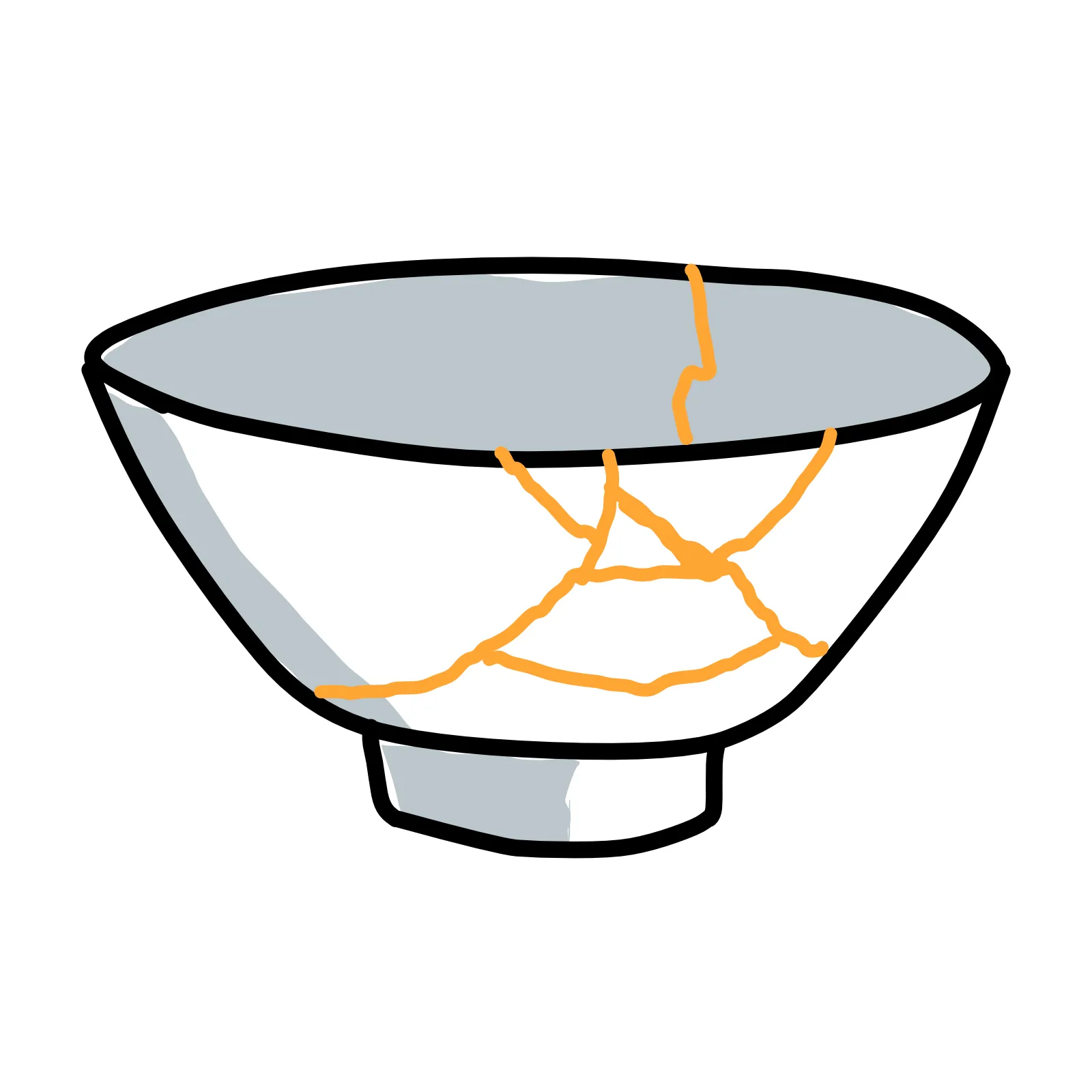
Repairing broken pottery with lacquer mixed with powdered gold or silver, treating each crack as part of the object's history rather than something to hide. The flaw becomes the feature.
Kludge
Spaghetti Code · Jugaad
A workaround or quick-and-dirty solution that is clumsy, inelegant, inefficient, difficult to extend and hard to maintain, yet nonetheless is operational.
Knolling
The process of arranging different objects so that they are at 90-degree angles from each other, and then often photographing them from above, but could also be used as a method for organizing, packing, and arranging more broadly.
Law of Good Continuation
The design aesthetic phenomenon where figures with edges that are smooth are more likely seen as continuous than edges that have abrupt or sharp angles.
Law of Prägnanz
Good Figure · Law of Simplicity
A fundamental principle of gestalt which says that people will perceive and interpret ambiguous or complex images as the simplest form(s) possible.
Möbius strip
Möbius Band
A surface with only one side and only one boundary (as a ring of paper that has been cut, one part turned 180 degrees, and reassembled), making it unorientable.
Most Advanced Yet Acceptable (MAYA)
An industrial design principle which seeks to give users the most advanced design, but not more advanced than what they were able to accept and embrace.
Omotenashi
A philosophy of hospitality centered on anticipating guests' needs and fulfilling them wholeheartedly, without pretense or expectation of anything in return.
Orientation Sensitivity
A phenomenon of visual processing in which certain line orientations are more quickly and easily processed and discriminated than other line orientations.
Parti Pris
The guiding concept or big idea behind a design, often expressed as a simple diagram or statement. In architecture, it's the core move everything else follows.
Performance Vs. Preference
The phenomenon where preferences are not always aligned by more efficient performance, i.e. designs that help people perform optimally are often not the same as the designs that people find most desirable. For example, the Dvorak keyboard allows for 30% improved typing efficiency, yet people continue to prefer the QWERTY keyboard layout.
Principle of Least Astonishment
Law of Least Surprise · POLA · POLS
The notion that a component of a system should behave in a way that most users will expect it to behave; the behavior should not astonish or surprise users.
Progressive Disclosure
An interaction design technique often used in human computer interaction and journalism to help maintain the focus of a user's attention by reducing clutter, confusion, and cognitive workload.
Prominence-Interpretation Theory
The usability observation that people determine a site's credibility by judging prominent attributes of the site that grab their attention.
Rule of Thirds
A rule of thumb which applies to the process of composing well-design visual images such as designs, films, paintings, and photographs.
Snap-to-Grid
Grid Snapping
Typically applied in digital graphic design, snap-to-grid is a function used to guide design work, nudging and constraining inputs to a fixed grid.
Urawaza
Japanese term that refers to a clever or unconventional solution or hack that solves a problem in a simple and efficient way, often using everyday items or resources.
Wabi-Sabi
The Japanese concept of a worldview centered on the acceptance of transience and imperfection.
Wayfinding
The design term describing how one orients themselves and navigates within a space, which could refer to compasses and maps as well as graphic design, tactile elements, and architecture.