Decisions & Problem-Solving
Abilene Paradox
A management term where people make decisions based not on what they actually want to do, but on what they think that other people want to do, resulting in a decision that in fact satisfies no one.
Accidental Complexity
Programming tasks which could be eliminated with better tools (as opposed to essential complexity inherent in the problem being solved).
Actor-Observer Bias
Fundamental Attribution Error
The notion that, in contrast to interpretations of their own behavior, people tend to (unduly) emphasize the agent's internal characteristics (character or intention), rather than external factors, in explaining other people's behavior — i.e. the tendency to believe that what people do reflects who they are.
Adaptive Bias
The notion that the human brain has evolved to reason adaptively, rather than truthfully or even rationally, and that cognitive bias may have evolved as a mechanism to reduce the overall cost of cognitive errors as opposed to merely reducing the number of cognitive errors, when faced with making a decision under conditions of uncertainty.
Adjacent Possible
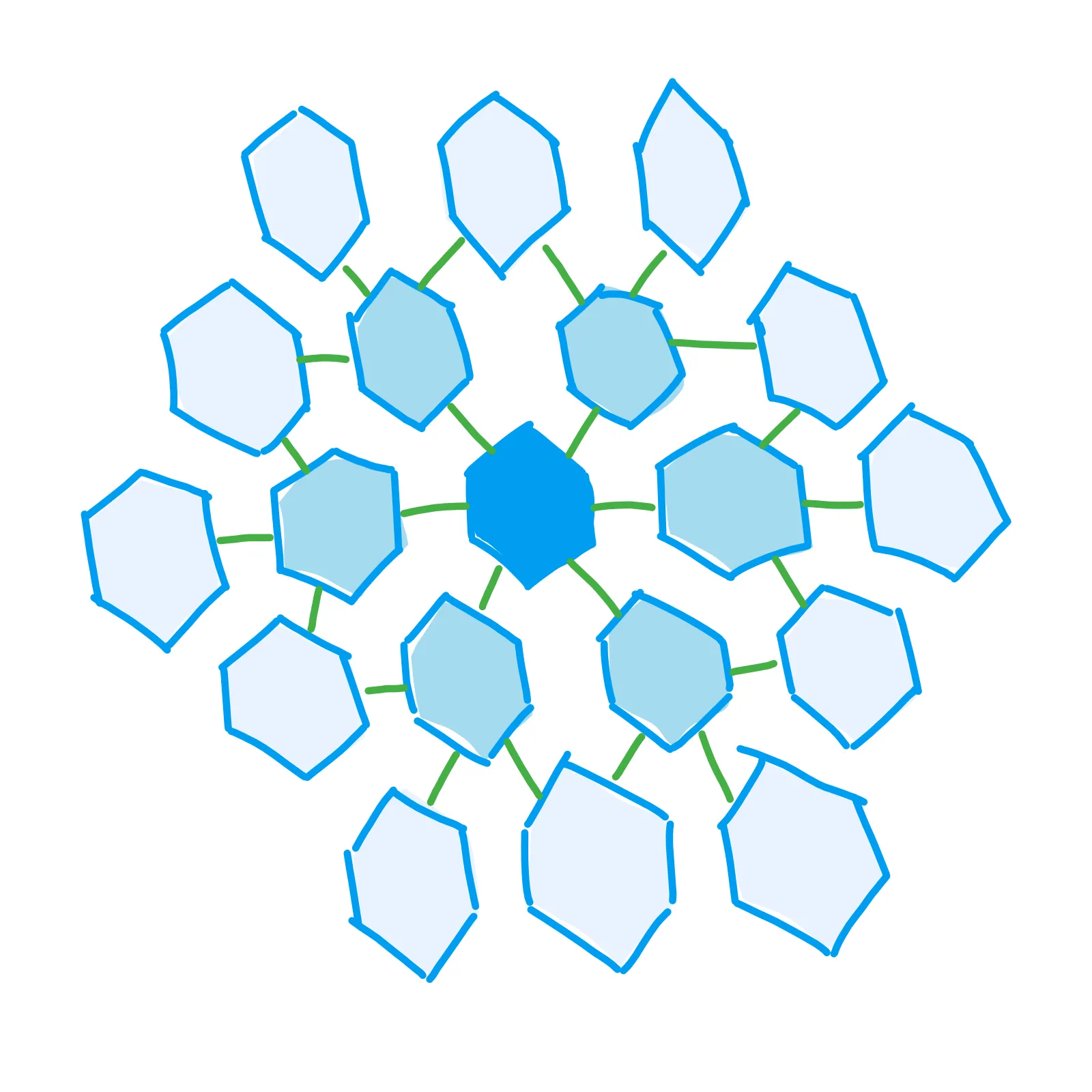
The set of all changes and innovations reachable from the current state of things — the first-order possibilities available at any given moment, shaped by what already exists.
Ambiguity Effect
A cognitive bias where decision making is affected by a lack of information, or "ambiguity". The effect implies that people tend to select options for which the probability of a favorable outcome is known, over an option for which the probability of a favorable outcome is unknown.
Analysis Paralysis
Paralysis by Analysis · Overthinking
The state of overthinking a decision to the point where no action is taken — when the pursuit of the perfect choice prevents any choice at all.
Anti-Pattern
A common response to a recurring problem that is usually ineffective and risks being highly counterproductive.
Apples to Oranges
Apples and Oranges
An idiom that refers to the apparent differences between items which are popularly thought to be incomparable or incommensurable, such as apples and oranges, as well as to indicate that a false analogy has been made between two items, such as where an apple is faulted for not being a good orange.
Attitude Polarization
Reactive Devaluation
A cognitive bias that occurs when a proposal is devalued if it appears to originate from an antagonist.
Attribute Substitution
Substitution Bias
A mental shortcut in which a person faced with a hard question unconsciously answers an easier, related one instead — without realizing a swap has occurred.
Attrition Warfare
War of Attrition
A military strategy in which a belligerent party attempts to win a war by wearing down the enemy to the point of collapse through continuous losses in personnel and material.
Availability Heuristic
Availability Heuristic
The tendency to judge the likelihood of events based on how easily examples come to mind, rather than on actual probability or statistical data.
Bikeshedding
Bike-Shed Effect · Parkinson's Law of Triviality
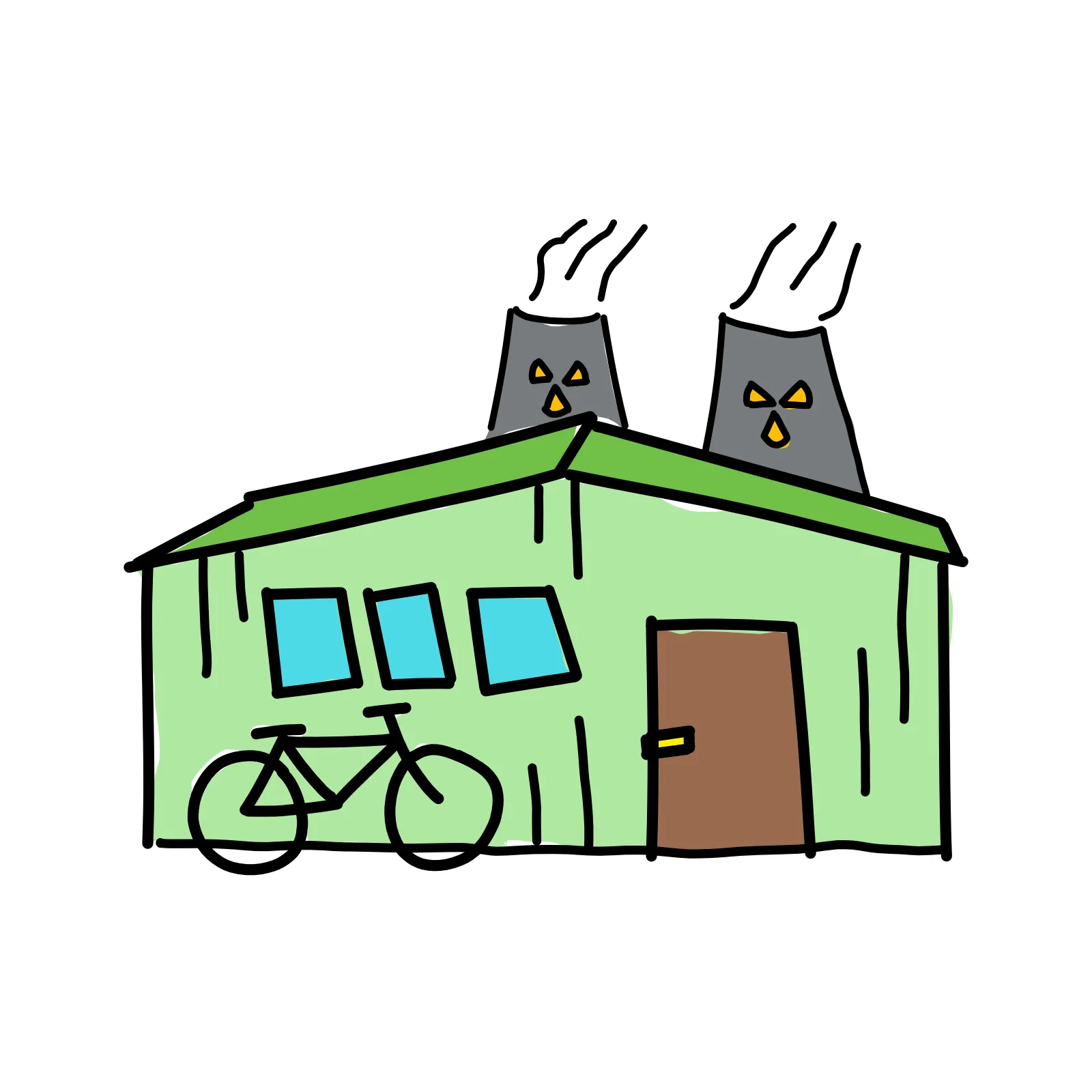
The tendency to give disproportionate weight to trivial issues of a larger or more complex project. In other words, prioritizing something easy to grasp or and/or is debatable.
Boiled Frog
An anecdote describing a frog in a pot of water where the water's temperature is gradually raised to the point of killing the frog without their noticing, but if the frog is placed instantly in hot water, it would jump out immediately.
Bounded Optimality
The notion of optimizing not the action that is taken but the algorithm that is used to choose that action. In other words, taking into account the cost of making a decision, and using resources to think rather than act.
Bounded Rationality
Decision-makers are limited in their rationality by the cognitive limitations of their minds (experience, logic), the time available to make a given decision, and the tractability of the decision problem itself (deciding the right thing at all). They are looking for a satisfactory solution rather than an optimal one. From Herbert A. Simon.
Brandolini's Law
Bullshit Asymmetry Principle
Internet adage recognizing that "the amount of energy needed to refute bullshit is an order of magnitude bigger than to produce it."
Buyer's Remorse
Feeling of regret or anxiety that a person may experience after making a purchase, often associated with the fear of having made a wrong or costly decision.
Call of the Void
Intrusive Thought
The experience of a sudden urge to act on an impulse that is precisely what your judgment is telling you not to do, such as overlooking from a tall height or the urge to pull a fire alarm for no reason.
Campbell's Law
The adage that "the more any quantitative social indicator is used for social decision-making, the more subject it will be to corruption pressures and the more apt it will be to distort and corrupt the social processes it is intended to monitor."
Case-Based Reasoning
Duck Test
Solving new problems by finding and adapting solutions from similar past situations. Experience becomes the primary guide rather than abstract rules.
Containment
A geopolitical strategy of preventing an adversary from expanding its influence, most famously applied during the Cold War to limit Soviet power.
Cynefin Framework
A conceptual framework used to aid decision-making. Described as a "sense-making device", Cynefin offers five decision-making contexts or 'domains'— obvious, complicated, complex, chaotic, and disorder—that help managers to identify how they perceive situations and make sense of their own and other people's behavior.
De Gustibus Non-Est Disputandum
A Latin maxim meaning "In matters of taste, there can be no disputes" — suggesting that personal preferences are subjective and cannot be argued as if one preference is "right" or "wrong".
Decoy Effect
Attraction Effect · Asymmetric Dominance Effect
The phenomenon where consumers will tend to have a specific change in preference between two options when also presented with a third option that is "asymmetrically dominated", that is, inferior in all respects to one option, but compared to the other option is inferior in some and superior in other respects — thereby nudging a preference for the dominating option.
Default Effect
The observation that if making an option a 'default' option increases the likelihood that it is chosen.
Deliberate Ignorance
Willful Ignorance · Information Avoidance · Strategic Ignorance
The conscious choice not to seek or use available information — even when obtaining it would be free and easy.
Delmore Effect
The observation that people paradoxically provide more articulate and explicit goals for lower-priority areas of their lives than for the areas they consider most important.
Design Pattern
A general, reusable solution to a commonly occurring problem in design or software. Patterns provide a shared vocabulary and proven approach rather than reinventing solutions from scratch.
Discursive Dilemma
Doctrinal Paradox
A paradox in social choice theory where aggregating judgments with majority voting can result in self-contradictory judgments.
Distinction Bias
The tendency to view two options as more distinctive when evaluating them simultaneously than when evaluating them separately.
Divergent Thinking Vs. Convergent Thinking
Complementary modes of problem-solving: convergent thinking narrows options toward a single correct answer, while divergent thinking generates multiple possible solutions by exploring varied and unexpected directions.
Divide and Conquer
Recursively breaking down a problem into two or more sub-problems of the same or related type, until these become simple enough to be solved directly.
Doris Day Effect

The notion that a setback or obstacle on a given path provides an opportunity for another path that in turn becomes potentially much more fruitful.
Dunning-Kruger Effect
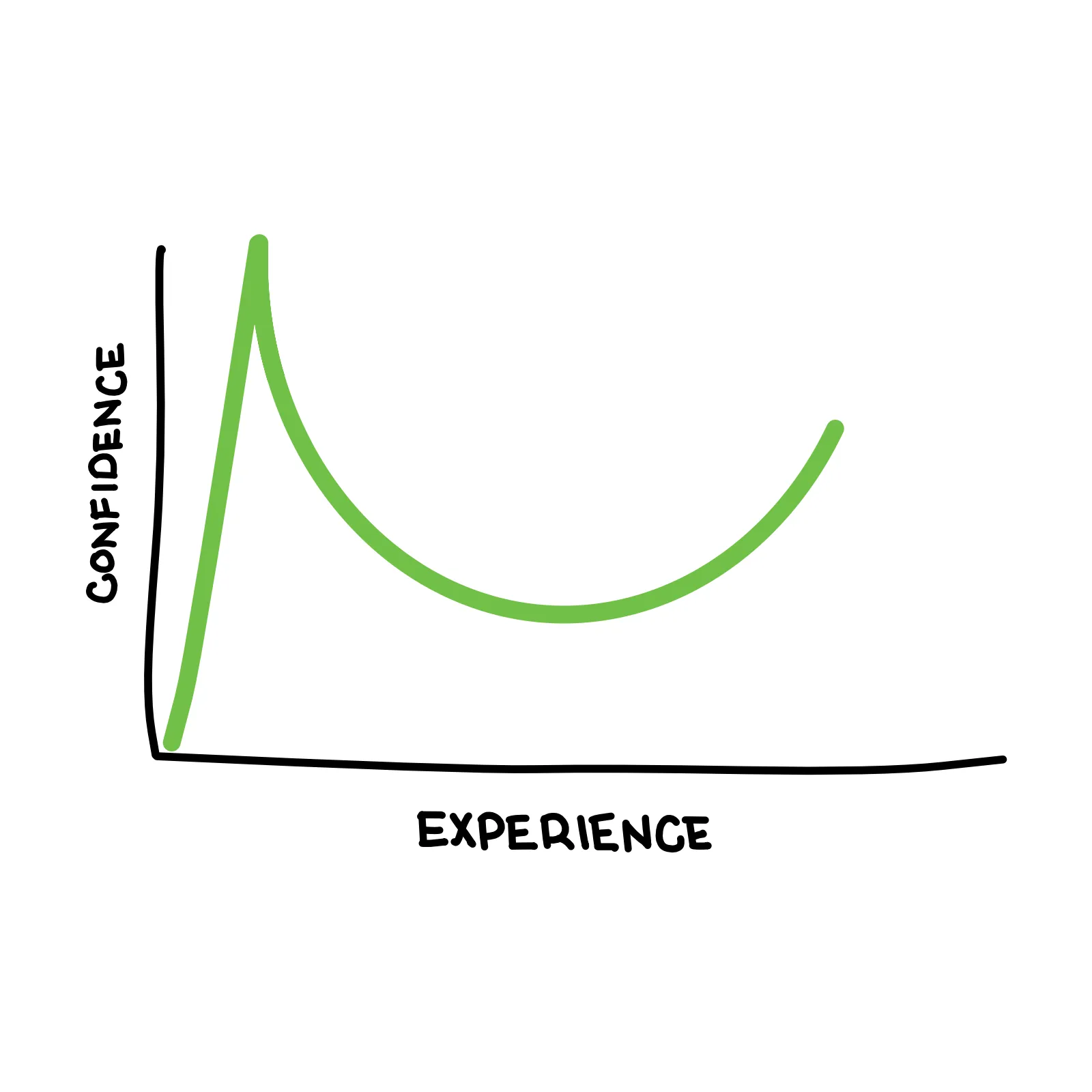
People with limited ability at a task tend to greatly overestimate their competence, while highly skilled people often underestimate theirs. The less you know, the more confident you feel about knowing it.
Effective Altruism
EA
A philosophy and social movement that uses evidence and reason to determine the most effective ways to do good — asking not just "should I help?" but "where will my help go furthest?"
Effectuation
A set of decision-making principles where entrepreneurs determine goals according to the resources in their possession, contrasted with 'causation', where entrepreneurs will determine goals to achieve and look for the resources to do so.
Effort Justification
A person's tendency to attribute a value to an outcome, which they had to put effort into achieving, greater than the objective value of the outcome.
Ego Depletion
The idea that self-control or willpower draws upon a limited pool of mental resources that can be used up. There have both been studies to support and to question the validity of ego-depletion as a theory.
Eierlegende-Wollmilchsau
A German term for an all-in-one solution that tries to do everything — the mythical "egg-laying wool milk sow." In practice, such solutions rarely exist.
Eigenquestions
A framing technique that identifies the one question whose answer likely resolves a cascade of subsequent questions as well.
Eisenhower Method
A time management framework that categorizes tasks along two axes — urgency and importance — to clarify that what is important is seldom urgent and what is urgent is seldom important.
Error Management Theory
A theory of perception and cognition biases referring to how humans think and make decisions using heuristics and biases that have survived evolutionary history, because they hold some evolutionary benefits.
Escalation of Commitment
Irrational Escalation
Pattern of behavior in which an individual or group facing increasingly negative outcomes from a decision, action, or investment nevertheless continues the behavior instead of altering course.
Exit Strategy
A strategic means of leaving one's current situation, either after a predetermined objective has been achieved, or as a strategy to mitigate failure.
False Dilemma
False Dichotomy · Fallacy of Bifurcation · Black-or-White Fallacy
Assuming that only two alternative statements are held to be the only possible options when in reality there are more.
Fingerspitzengefühl
The intuitive, almost tactile sense that lets someone make quick, effective decisions without conscious analysis. The kind of expertise you can feel but can't easily explain.
Flexibility-Usability Tradeoff
The design principle that as the flexibility of a system increases, its usability decreases. The tradeoff exists because accommodating flexibility requires satisfying a larger set of requirements, which results in complexity and usability compromises.
Focal Point
Schelling Point
A solution that people will tend to use in the absence of communication, because it seems natural, special, or relevant to them.
Forcing Function
A constraint or mechanism that compels a particular behavior or outcome. Deadlines, public commitments, and design constraints all serve as forcing functions.
Game Theory
The mathematical study of strategic decision-making, where your best move depends on what others do. It models competition, cooperation, and conflict.
Groupthink
A psychological phenomenon that occurs within a group of people in which the desire for harmony or conformity results in an irrational or dysfunctional decision-making outcome.
Gunslinger Effect
A finding in motor neuroscience that reactive movements are executed roughly 10% faster than self-initiated ones — the person who draws second in a duel moves more quickly, even though they still usually lose due to the delay of reacting.
Hanlon's Razor
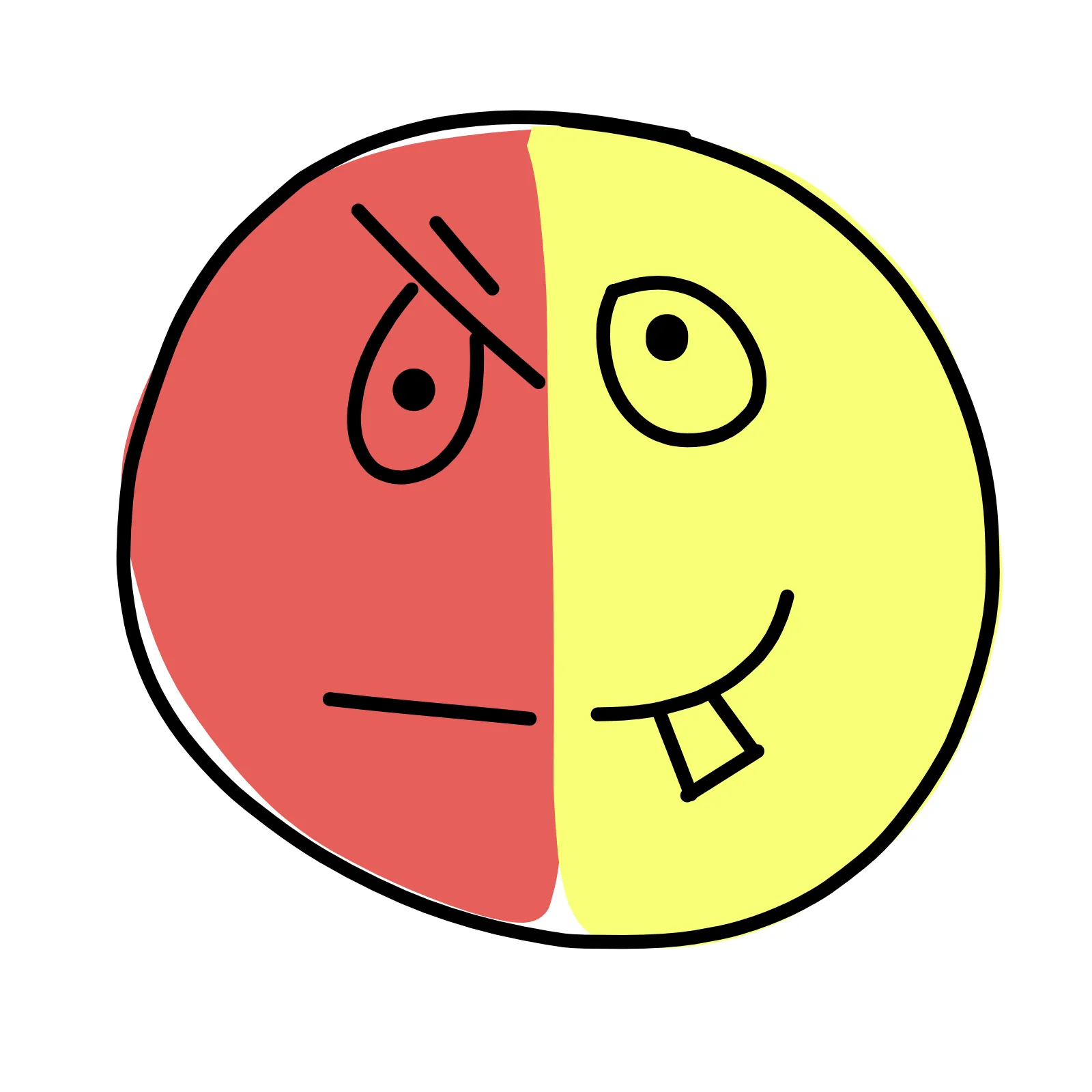
The aphorism which reminds us to never attribute to malice something that can simply be explained by incompetence.
Heuristic
Any approach to problem solving, learning, or discovery that employs a practical method — not guaranteed to be optimal, perfect, logical, or rational — but instead sufficient for reaching an immediate goal.
Hick's Law
Hick–Hyman Law
Describes the time it takes for a person to make a decision as a result of the possible choices he or she has: increasing the number of choices will increase the decision time logarithmically.
Inconsistent Comparison
When different methods of comparison are used, leaving a false impression of the whole comparison.
Johari Window
Known Unknowns Vs. Unknown Unknowns
A framework for understanding self-awareness through a 2x2 matrix of what is known or unknown to oneself and to others, producing four quadrants: Open (known to all), Blind (seen by others but not oneself), Hidden (known to oneself but concealed), and Unknown (not yet recognized by anyone).
Jugaad
A non-conventional solution or hack to a problem — often both frugal in nature and demonstrating a degree of creativity.
Kludge
Spaghetti Code · Jugaad
A workaround or quick-and-dirty solution that is clumsy, inelegant, inefficient, difficult to extend and hard to maintain, yet nonetheless is operational.
Kurtosis Risk
In statistics and decision theory, the risk that results when a statistical model assumes the normal distribution, but is applied to observations that have a tendency to occasionally be much farther (in terms of number of standard deviations) from the average than is expected for a normal distribution.
Last Responsible Moment
LRM
Decision-making principle that suggests that the best time to make a decision is when the maximum amount of information is available, but not so late that the decision cannot be made in time to meet its intended purpose.
Lateral Thinking
Solving problems through an indirect and creative approach, i.e. using reasoning that is not immediately obvious and involving ideas that may not be obtainable by using only traditional step-by-step logic.
Law of Prägnanz
Good Figure · Law of Simplicity
A fundamental principle of gestalt which says that people will perceive and interpret ambiguous or complex images as the simplest form(s) possible.
Less-is-Better Effect
A type of preference reversal that occurs when the lesser or smaller alternative of a proposition is preferred when evaluated separately, but not evaluated together.
Long Game
The practice of considering the future implications of current choices in the context of future situations, where there might be short-term losses strategically made in favor of the potential for long-term gains down the road.
Long-Tail Distribution
In statistics, a model which describes a distribution of occurrences where a large portion of the distribution are far from the "head" or central part of the distribution. Often applied in a business, to apply to business models that can offer many different varieties of uncommon goods (Amazon or Netflix), as opposed to few varieties of common goods (Walmart).
Loss-Leader
A pricing strategy where a product is sold at a price below its market cost to stimulate other sales of more profitable goods or services.
Lottery Factor
Bus Factor
Aa measurement of the risk resulting from information and capabilities being lost or not being shared among team members. From the phrase, "in case they get hit by a bus."
Magic Quadrant
2x2 Matrix
A decision support technique of options plotted on a two-by-two matrix where the matrix diagram is a simple square divided into four equal quadrants. Each axis represents a decision criterion, such as cost or effort. Each axis is divided into two sections (example: low cost/high cost and easy/difficult).
Marshmallow Test
Delayed Gratification

A purported connection between self-regulation and long-term positive outcomes, where the ability to forego immediate rewards is evidence of a discipline that serves in many other beneficial areas of life.
Maslow's Hammer
Law of the Instrument · Golden Hammer

The over-reliance on a particular tool simply because that tool is either more immediately available or because it's more familiar.
McNamara Fallacy
Quantitative Fallacy
The fallacy of making decisions based solely on *observable* metrics, while ignoring all others.
Mental Model
An explanation of a thought process, typically in a more abstract form, about how something works in the real world.
Monte Carlo Simulation
Monte Carlo Method
Algorithmic approach for building simulations and predictive models where the intervention of random variables makes them hard to predict in more standard models.
Neglect of Probability
Base Rate Neglect · Probability Neglect
The tendency to disregard probability when making a decision under uncertainty. Small risks are typically either neglected entirely or hugely overrated.
Nirvana Fallacy
Perfect Solution Fallacy
Rejecting a practical solution because it isn't perfect. By comparing real options to an impossible ideal, nothing ever measures up.
Nuclear Option
An extreme measure of last resort that may solve an immediate problem but carries severe collateral costs — named for the idea that, like a nuclear strike, the fallout affects everyone.
Nudge
A notion that positive reinforcement and indirect suggestions as ways to steer or influence the behavior and decision making of groups or individuals (while still preserving freedom of choice).
Occam's Razor
Ockham's Razor · Law of Parsimony
A problem-solving principle which says that all else being equal, the simplest solution is more often the correct one.
Omission Bias
The tendency to judge harmful actions as worse, or less moral than equally harmful omissions (inactions) because actions are more obvious than inactions.
OODA Loop
A four-step decision-making framework — Observe, Orient, Decide, Act — originally developed for military strategy. The faster you cycle through the loop, the greater your advantage.
Optimism Bias
Unrealistic Optimism
Causes a person to believe that they are at a lesser risk of experiencing a negative event compared to others.
Outcome Bias
An error made in evaluating the quality of a decision when the outcome of that decision is already known.
Overjustification Effect
When an expected external incentive such as money or prizes decreases a person's intrinsic motivation to perform a task.
Paradox of Choice
Overchoice
The observation that having too many options can lead to anxiety, decision paralysis, and reduced satisfaction — and that limiting choices often produces better outcomes.
Parti Pris
The guiding concept or big idea behind a design, often expressed as a simple diagram or statement. In architecture, it's the core move everything else follows.
Path Dependence
How the set of decisions one faces for any given circumstance is limited by the decisions one has made in the past or by the events that one has experienced, even though past circumstances may no longer be relevant.
Pessimism Bias
The tendency to overestimate the likelihood and severity of negative outcomes, particularly prominent in people experiencing anxiety or depression.
Poison Pill
Shareholder Rights Plan
In business, a type of defensive tactic used by a corporation's board of directors against a takeover. Typically, such a plan gives shareholders the right to buy more shares at a discount if one shareholder buys a certain percentage or more of the company's shares.
Potemkin Village
A construction built solely to deceive others into believing that a situation is better than it really is.
Premortem
Pre-Mortem
A managerial strategy in which a project team imagines that a project or organization has failed, and then works backward to determine what potentially could lead to the failure of the project or organization.
Preserving Optionality
Real Options
A strategy of keeping one's options open and available as long as possible (resisting the urge to choose too soon), while uncertainties can still possibly be clarified.
Primrose Path
An expression for a way of life that is thought to be easy and pleasant, but in fact, leads to a negative result.
Prospect Theory
A model of how people actually make decisions under risk — not rationally, but by weighing potential losses more heavily than equivalent gains. We're not calculating expected value; we're feeling our way through.
Ranked-Choice Voting
Instant-Runoff Voting
A voting system where voters rank candidates in order of preference instead of picking just one. If no candidate wins a majority, the lowest-ranked is eliminated and those votes redistribute until someone does.
Representativeness Heuristic
Judging probability by how closely something resembles a typical example, rather than by actual statistics. It's why people expect coin flips to "even out" and why stereotypes feel like predictions.
Revealed Preference
A method of analyzing choices made by individuals, mostly used for comparing the influence of policies on consumer behavior — and assumes that the preferences of consumers can be revealed by their purchasing habits.
Reversible Vs. Irreversible Decisions
The two types of decision consequences, where reversible decisions can be unwound in a reasonable period of time, and an irreversible decision that are usually difficult or impossible to reverse.
Risk Compensation
Peltzman Effect
A theory which suggests that people typically adjust their behavior in response to the perceived level of risk, becoming more careful where they sense greater risk and less careful if they feel more protected.
Salience Bias
The tendency to use highly visible or shocking traits to make a judgment or determination about a person or a situation.
Satisfice
Satisfy' and 'suffice' — decision-making strategy where one searches through available alternatives until an acceptability threshold is met.
Short-Termism
Prioritizing immediate results at the expense of long-term health and sustainability. Common in business, politics, and personal decision-making alike.
Silver Bullet
Magic Bullet · Panacea
A simple, seemingly magical solution to a difficult problem. The term is often invoked skeptically to argue that complex problems rarely have easy fixes.
Solutionism
The belief that every problem has a clean, often technological fix. Solutionism underestimates complexity and the possibility that some problems must be managed, not solved.
Sophie's Choice
A dilemma in which a person must choose between two equally terrible options, where any choice results in an unbearable loss.
Stakeholder Theory
A theory of organizational management and ethics that addresses morals and values in decision-making, particularly at the management level, and address the principle of who or what really counts.
Status Quo Bias
The preference for things to stay as they are, even when change would be beneficial. People tend to perceive any deviation from the current state as a loss.
Strategy Vs. Tactics
Strategy is a set of choices used to achieve an overall objective whereas tactics are the specific actions used when applying those strategic choices.
Thinking Fast Vs. Thinking Slow
System 1 Vs. System 2 Thinking
The notion that there is a dichotomy between two "modes" of thought: ‘System 1' representing the fast, instinctive and emotional, where ‘System 2' is slower, more deliberative, and more logical.
Third Story
The narrative or testimony of an impartial observer or a mediator would tell — a version of events both sides can agree on.
TRIZ
A problem-solving methodology that emphasizes the use of inventive principles and patterns to find creative solutions to technical problems.
Trojan Horse
A deceptive strategy that disguises a threat as a gift, causing the target to willingly let danger inside their defenses. Named after the legendary Greek siege tactic.
Trolley Problem
Trolley Dilemma
A thought experiment asking whether it is right to divert a runaway trolley onto a track where it will kill one person in order to save five — probing the tension between action and inaction in moral reasoning.
Tyranny of Small Decisions
A situation where a series of small, individually rational decisions can negatively change the context of subsequent choices, even to the point where desired alternatives are irreversibly destroyed.
Ulysses Pact
Ulysses Contract
A commitment you make in advance to bind your future self — like Odysseus tying himself to the mast so he couldn't yield to the Sirens' song.
Unit Bias
The tendency to believe that a single unit of something — one serving, one portion, one item — is the appropriate amount, regardless of its actual size. A bigger plate leads to a bigger meal.
Urawaza
Japanese term that refers to a clever or unconventional solution or hack that solves a problem in a simple and efficient way, often using everyday items or resources.
Veil of Ignorance
A thought experiment where you design a society's rules without knowing what position you'll occupy in it. If you don't know whether you'll be rich or poor, you tend to design fairer systems.
Why Wasn't I Consulted (WWIC)
Phrase used to describe the frustration or resentment that individuals may feel when they are not included in decision-making processes that directly affect them or their work.
Wicked Problems
A problem that resists resolution due to incomplete, contradictory, and shifting requirements, where solving one aspect may reveal or create other problems.
Winning a Battle but Losing the War
Pyrrhic Victory
A strategy that wins a lesser objective but overlooks and loses the true intended objective.
Zero-Risk Bias
A tendency to prefer the complete elimination of a risk even when alternative options produce a greater reduction in risk (overall). For example, war against terrorism as opposed to reducing the risk of traffic accidents or gun violence.
Zugzwang
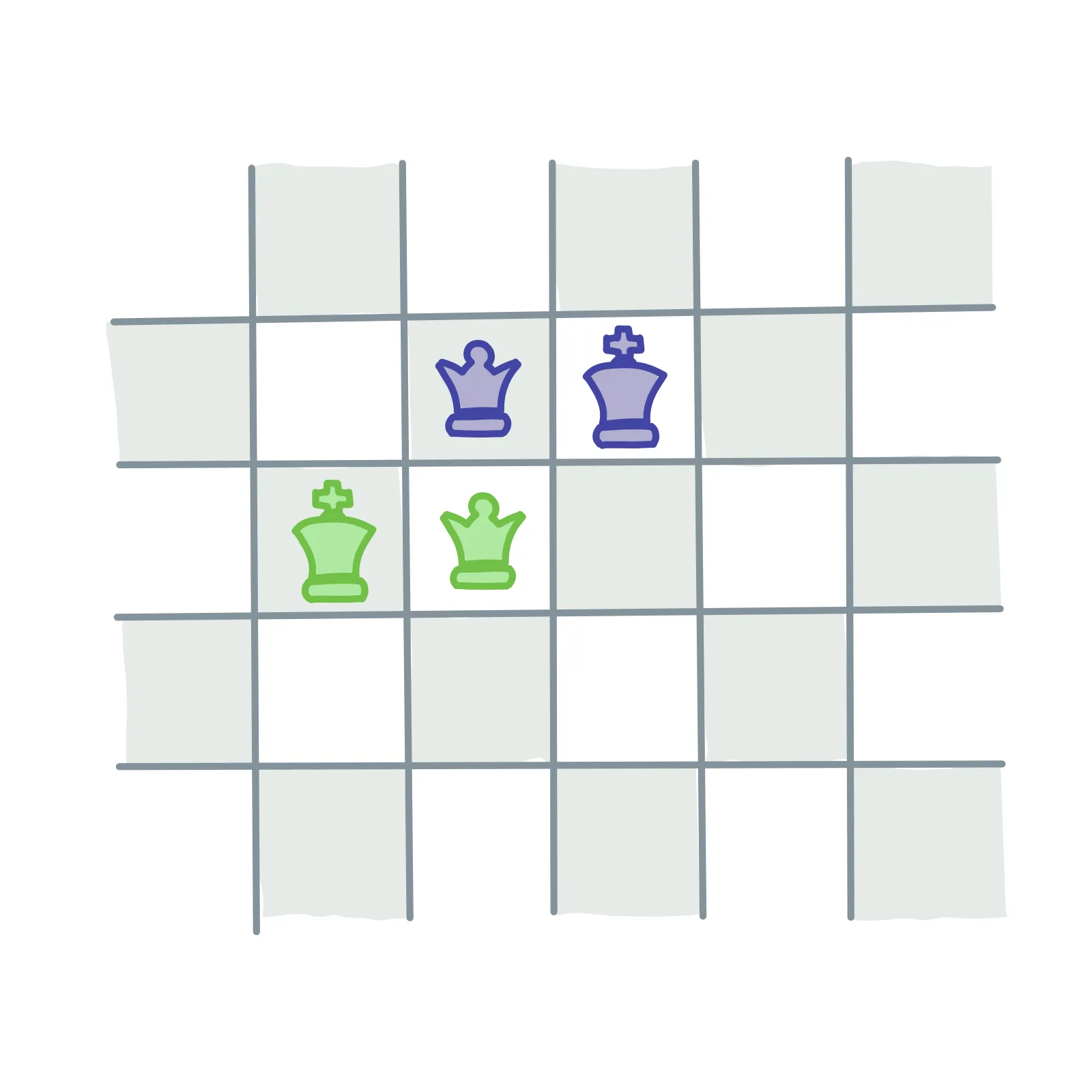
A situation found in chess and other games wherein one player is put at a disadvantage because they must make a move when they would prefer to pass and not move.