Psychology
Abstinence Violation Defect
Cognitive-behavioral phenomenon that occurs when an individual who is trying to maintain abstinence from a certain behavior experiences a lapse or relapse, leading to feelings of guilt, shame, and hopelessness.
Adaptive Bias
The notion that the human brain has evolved to reason adaptively, rather than truthfully or even rationally, and that cognitive bias may have evolved as a mechanism to reduce the overall cost of cognitive errors as opposed to merely reducing the number of cognitive errors, when faced with making a decision under conditions of uncertainty.
Affect Heuristic
A mental shortcut where current emotions — fear, pleasure, dread, comfort — serve as a rapid guide for judgments and decisions, often bypassing slower analytical reasoning.
Affective Forecasting
Hedonic Forecasting · Projection Bias
Predicting how you'll feel in the future about an event or decision. Research shows people consistently overestimate both the intensity and duration of their future emotions.
Ambiguity Effect
A cognitive bias where decision making is affected by a lack of information, or "ambiguity". The effect implies that people tend to select options for which the probability of a favorable outcome is known, over an option for which the probability of a favorable outcome is unknown.
Apophenia
The tendency to mistakenly perceive connections and meaning between unrelated things. It has come to imply a universal human tendency to seek patterns in random information.
Attribute Substitution
Substitution Bias
A mental shortcut in which a person faced with a hard question unconsciously answers an easier, related one instead — without realizing a swap has occurred.
Availability Cascade
A self-reinforcing cycle where an idea gains credibility simply because more people are repeating it. Popularity substitutes for evidence, and the belief snowballs through social networks.
Availability Heuristic
Availability Heuristic
The tendency to judge the likelihood of events based on how easily examples come to mind, rather than on actual probability or statistical data.
Backfire Effect
Cognitive bias that causes people who encounter evidence which challenges their beliefs to reject that evidence, and to strengthen their support of their original stance.
Barnum Effect
Forer Effect
The tendency to accept vague, generic personality descriptions as uniquely accurate for yourself. It's why horoscopes, fortune cookies, and personality quizzes feel so personally spot-on.
Bias Blind Spot
The cognitive bias of recognizing the impact of biases on the judgment of others, while failing to see the impact of biases on one's own judgment.
Bulletproof Glass Effect
The paradox in which a visible safety or privacy measure — meant to reassure — instead signals danger and reduces trust, much like bulletproof glass in a shop that makes visitors assume the neighborhood is unsafe.
Buyer's Remorse
Feeling of regret or anxiety that a person may experience after making a purchase, often associated with the fear of having made a wrong or costly decision.
Call of the Void
Intrusive Thought
The experience of a sudden urge to act on an impulse that is precisely what your judgment is telling you not to do, such as overlooking from a tall height or the urge to pull a fire alarm for no reason.
Carrots and Sticks
Carrot and Stick
A policy of offering a combination of rewards and punishments to induce appropriate behavior.
Chilling Effect

The impact that coercion, or threat of coercion, can have in stifling specific behavior, such as general free speech, contributing unpopular opinions, or calling out injustice.
Classical Conditioning
Pavlovian Conditioning · Respondent Conditioning
A learning process in which a neutral stimulus (like a bell) is repeatedly paired with a biologically significant one (like food) until the neutral stimulus alone triggers a similar response (like salivation).
Cognitive Estrangement
A technique in science fiction that presents an alternative reality plausible enough to take seriously but strange enough to make the reader question assumptions about their own world.
Confirmation Bias
Confirmatory Bias · Myside Bias
The tendency to search for, interpret, favor, and recall information in a way that confirms one's preexisting beliefs or hypotheses, while giving disproportionately less consideration to alternative possibilities.
Construal
In social psychology, a broad term for the heuristics of how individuals perceive, comprehend, and interpret the world around them — particularly the behavior or action of others towards themselves.
Curse of Knowledge
Tappers and Listeners
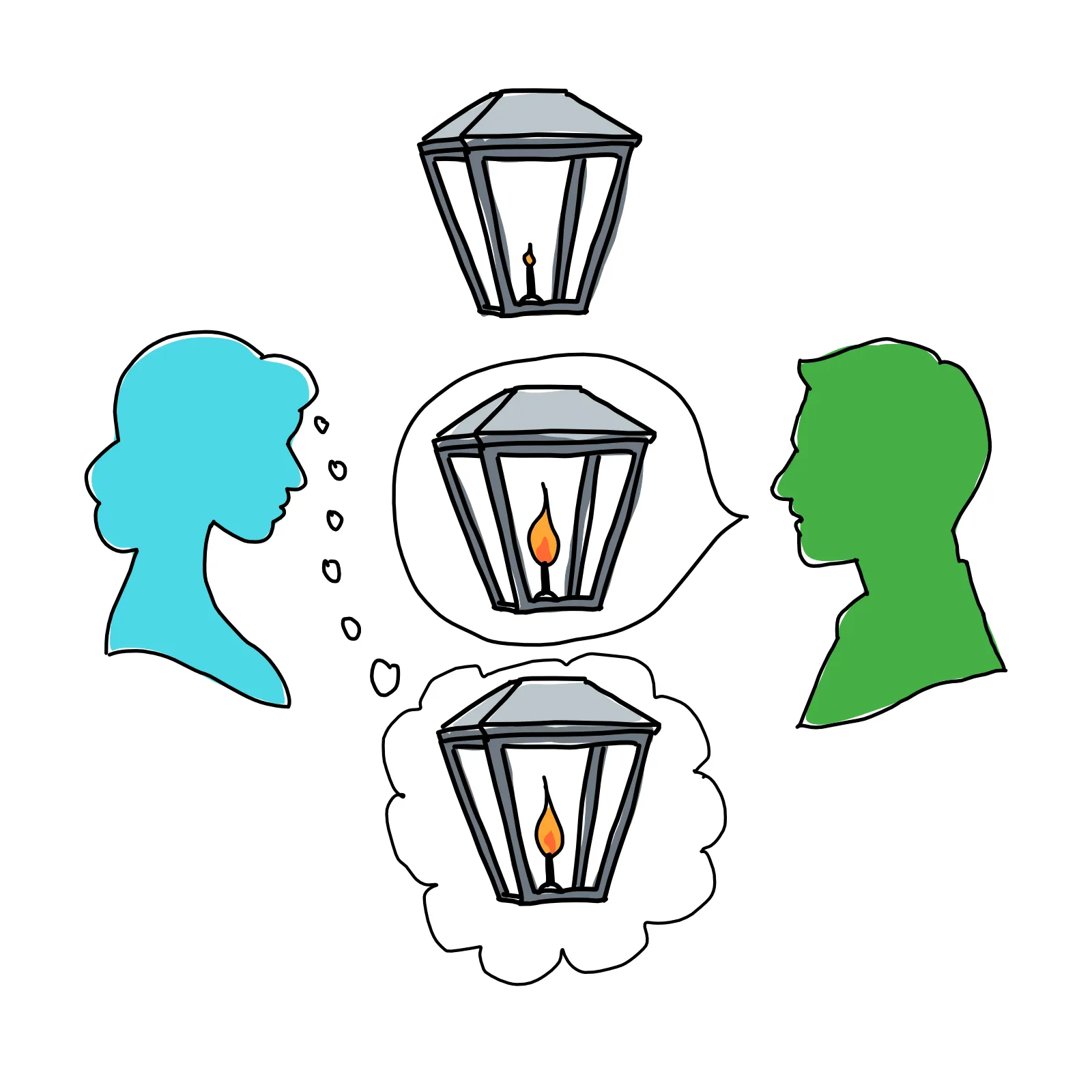
The difficulty of imagining what it's like not to know something you already know. Experts chronically overestimate how well others understand them because they can't un-know their own expertise.
Deliberate Ignorance
Willful Ignorance · Information Avoidance · Strategic Ignorance
The conscious choice not to seek or use available information — even when obtaining it would be free and easy.
Denomination Effect
A form of cognitive bias relating to currency, suggesting people may be less likely to spend larger currency denominations than their equivalent value in smaller denominations.
Dunbar's Number
The suggested cognitive limit to the number of friends one can maintain, in terms of stable, social relationships, which is usually said to be around 150.
Dunning-Kruger Effect
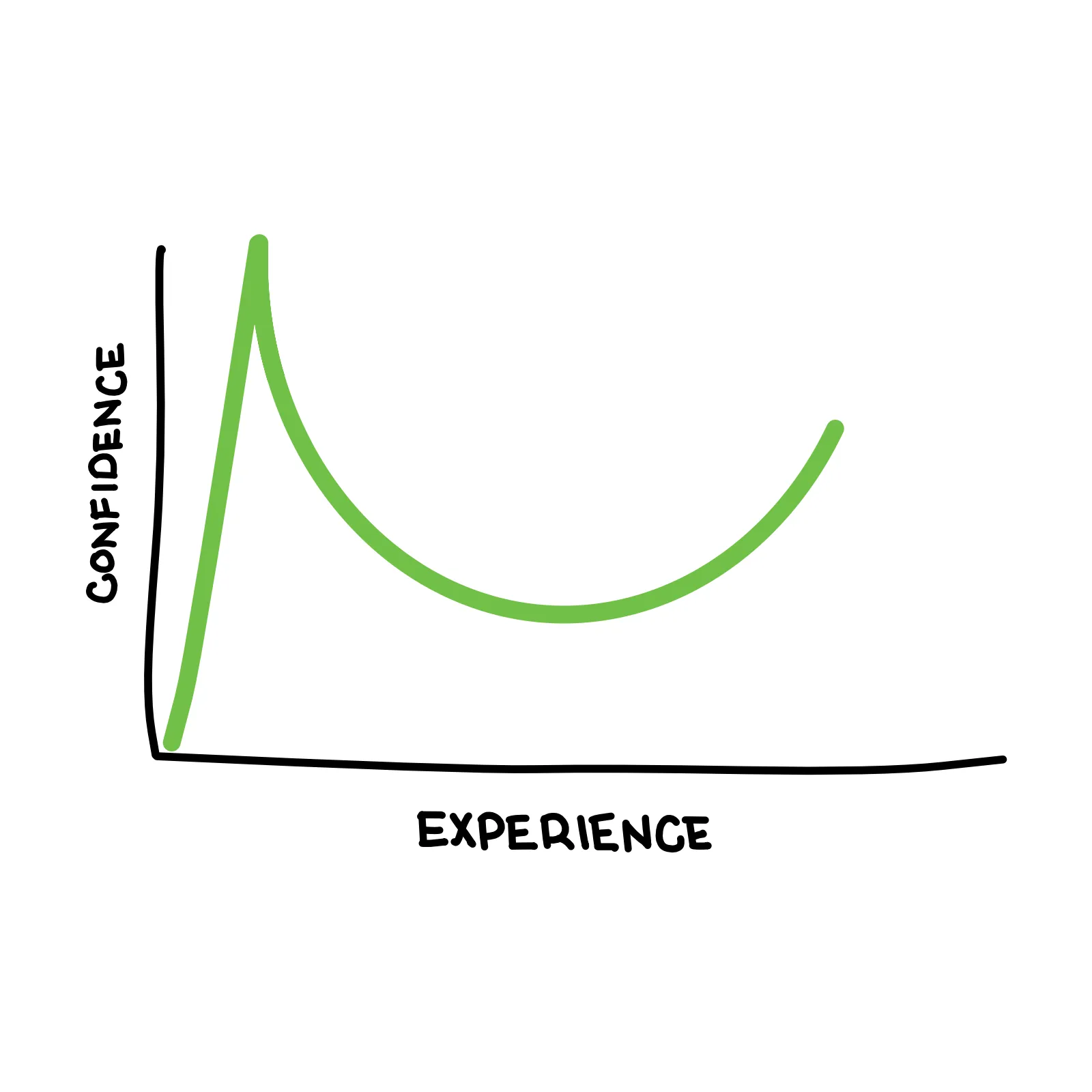
People with limited ability at a task tend to greatly overestimate their competence, while highly skilled people often underestimate theirs. The less you know, the more confident you feel about knowing it.
Empathy Gap
Cognitive bias in which people underestimate the influences of visceral drives on their own attitudes, preferences, and behaviors.
Escalation of Commitment
Irrational Escalation
Pattern of behavior in which an individual or group facing increasingly negative outcomes from a decision, action, or investment nevertheless continues the behavior instead of altering course.
Exposure Effect
Familiarity Principle · Mere-Exposure Effect
A psychological phenomenon by which people tend to develop a preference for things merely because they are familiar with them.
Extrinsic Incentives Bias
Extrinsic Incentive Bias
An attributional bias where people attribute relatively more to "extrinsic incentives" (such as monetary reward) than to "intrinsic incentives" (such as learning a new skill) when weighing the motives of others rather than themselves.
False-Consensus Effect
False-Consensus Bias
The tendency to overestimate how many other people share your opinions, preferences, and habits — assuming your way of thinking is more "normal" than it actually is.
Fan Effect
A psychological phenomenon where recognition times or error rates for a particular concept increases as more information about the concept is acquired. The word "fan" refers to the number of associations correlated with the concept.
Fingerspitzengefühl
The intuitive, almost tactile sense that lets someone make quick, effective decisions without conscious analysis. The kind of expertise you can feel but can't easily explain.
Functional Fixedness
A cognitive bias that limits a person to use an object only in the way it is traditionally used.
Gaslight
To knowingly present false information to someone, making them doubt their own observations, memory, and self-trust.
Groupthink
A psychological phenomenon that occurs within a group of people in which the desire for harmony or conformity results in an irrational or dysfunctional decision-making outcome.
Growth Mindset Vs. Fixed Mindset
Fixed Mindset is the belief that abilities are innate, and failure is interpreted as a lack of those abilities, where Growth Mindset is the belief that one can acquire abilities provided appropriate effort.
Gunslinger Effect
A finding in motor neuroscience that reactive movements are executed roughly 10% faster than self-initiated ones — the person who draws second in a duel moves more quickly, even though they still usually lose due to the delay of reacting.
Hard-Easy Effect
Discriminability Effect · Difficulty Effect
The tendency to be overconfident on hard tasks and underconfident on easy ones. We overestimate our chances when things look difficult, and underestimate them when things look simple.
Hero's Journey
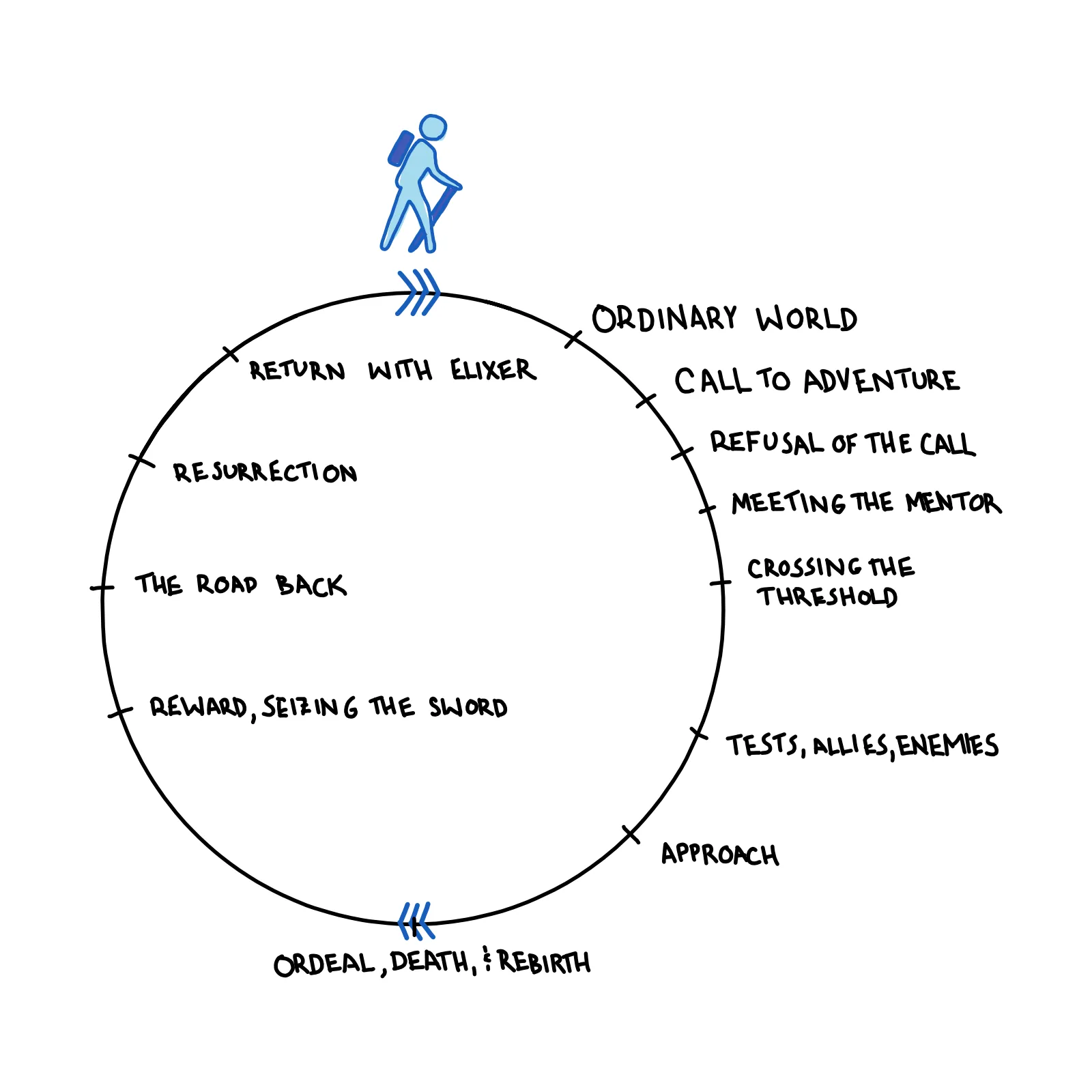
A common mythological narrative template in which a hero departs on an adventure, faces a decisive crisis, wins a victory, and returns home changed or transformed.
Hostile Attribution Bias
Hostile Attribution of Intent
The tendency to interpret others' behaviors as having hostile intent, even when the behavior is ambiguous or benign.
Illusion of Asymmetric Insight
A cognitive bias whereby people perceive their knowledge of others to surpass other people's knowledge of them.
Illusion of Control
The tendency to believe you have more influence over outcomes than you actually do, especially in situations governed by chance.
Illusory Superiority
Self-Enhancement Effect · Lake Wobegon Effect · Better-Than-Average Effect · Above-Average Effect · Superiority Bias · Positive Illusions
A cognitive bias where people overestimate their own qualities and abilities relative to others — most people, for example, rate themselves as above-average drivers.
Impact Bias
Durability Bias
The tendency for people to overestimate the length or the intensity of future emotional states.
Imposter Syndrome
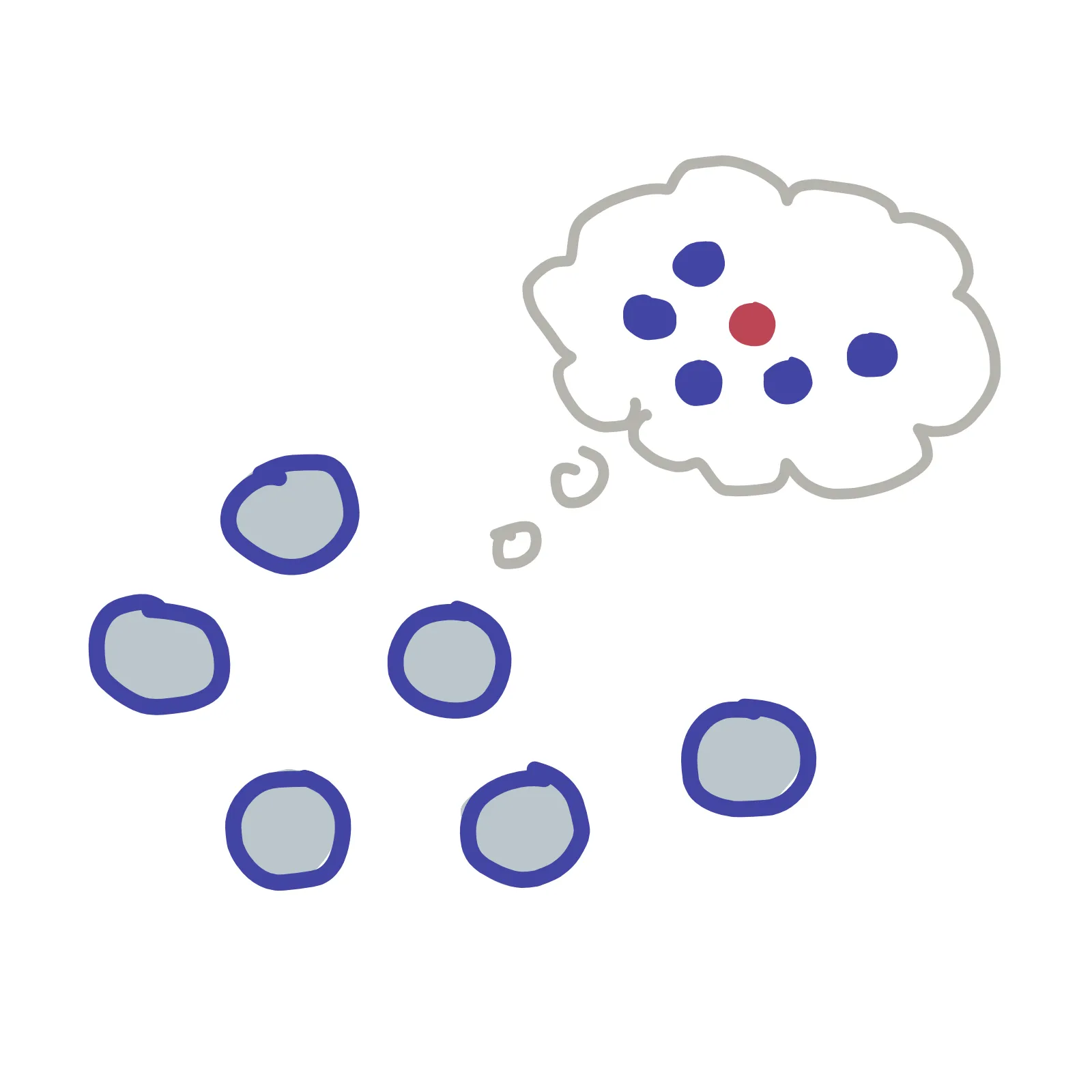
The idea (and fear) that one will be exposed as a 'fraud' in their position or for their accomplishments, even in the face of objective evidence to the contrary.
Introspection Illusion
A cognitive bias in which people wrongly think they have direct insight into the origins of their mental states, while treating others' introspections as unreliable.
Law of Jante
Scandinavian social code that emphasizes humility, conformity, and egalitarianism, and discourages individualism and self-promotion.
Marshmallow Test
Delayed Gratification
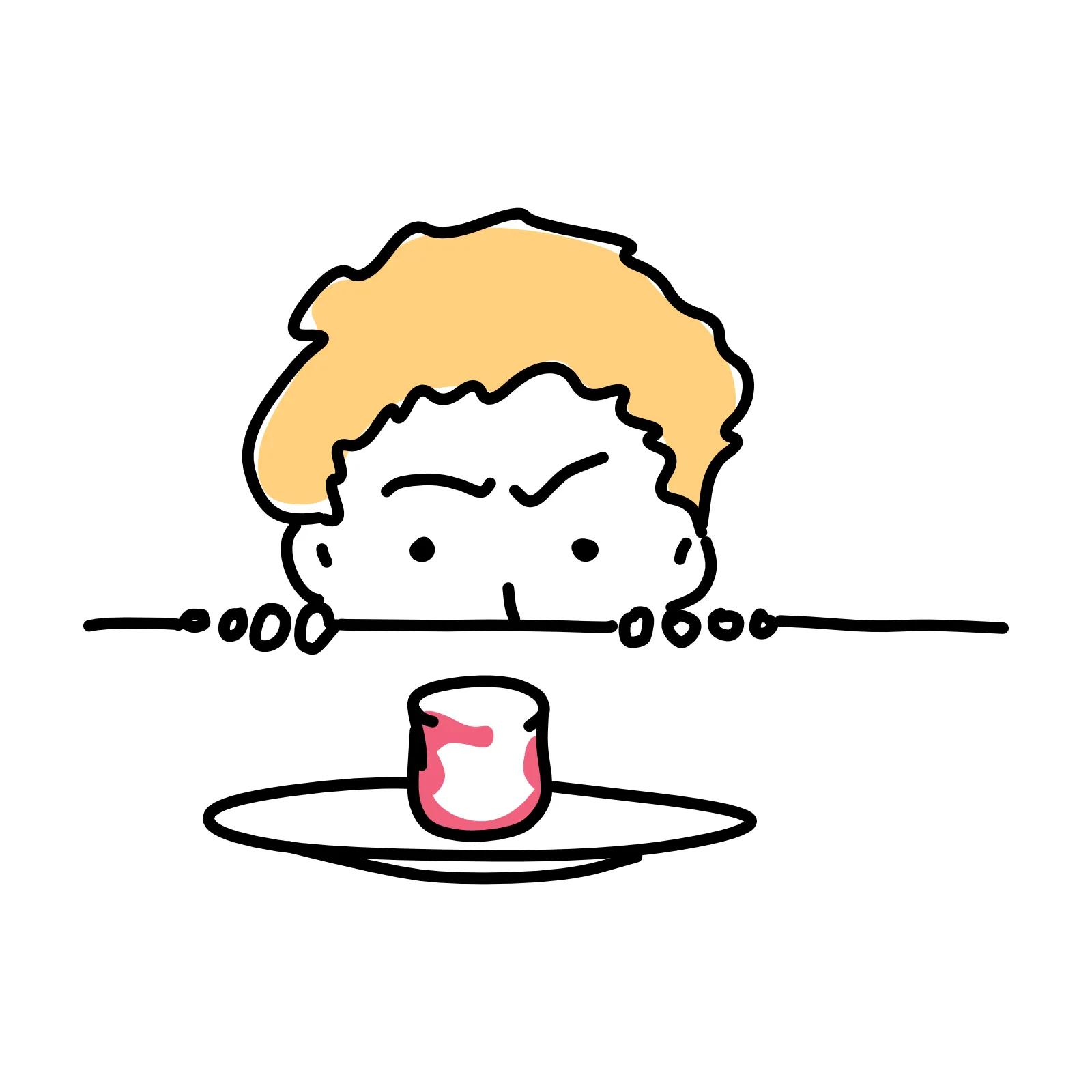
A purported connection between self-regulation and long-term positive outcomes, where the ability to forego immediate rewards is evidence of a discipline that serves in many other beneficial areas of life.
Martha Mitchell Effect
The process by which a mental health professional labels the patient's accurate perception of real events as delusional, and therefore misdiagnoses accordingly.
Maslow's Hierarchy of Needs
Maslow used the terms ‘physiological', ‘safety', ‘belongingness' and ‘love', ‘esteem', ‘self-actualization', and ‘self-transcendence' to describe the pattern that human motivations generally move through, in a ranked and building fashion.
Matilda Effect
A bias against acknowledging the achievements of those women scientists whose work is attributed to their male colleagues.
Matutolypea
A state of extreme funk/irritability after waking up — i.e. getting up on the wrong side of the bed.
Mere-Exposure Effect
The tendency to develop a preference for things simply because you've encountered them before. Familiarity breeds not contempt, but comfort.
Mind Projection Fallacy
An informal fallacy where someone thinks that the way they see the world reflects the way the world really is.
Mozart Effect
The notion that listening to Mozart (and similar classical music) makes one smarter and can improve test scores — though not scientifically verified.
Munchausen Syndrome
Factitious Disorder Imposed on Self
A factitious disorder wherein those affected feign disease, illness, or psychological trauma to draw attention, sympathy, or reassurance to themselves.
Naïve Cynicism
The tendency to assume other people are more selfishly motivated than they actually are. We expect bias in others while remaining blind to our own.
Narcissistic Trespass
Term used to describe the violation of personal boundaries and invasion of privacy by individuals with narcissistic tendencies or personality disorder, often causing emotional harm and psychological distress to their victims.
Negativity Bias
Negativity Effect
The notion that, even when of equal intensity, things of a more negative nature (e.g. unpleasant thoughts, emotions, or social interactions; harmful/traumatic events) have a greater effect on one's psychological state and processes than neutral or positive things.
Noble Cause Corruption
Moral Credential Effect
Confidence in one's self-image tends to make one less worried about the consequences of subsequent immoral behavior, thus making one more likely to make immoral choices.
Observer's Illusion of Transparency
Illusion of Transparency
The tendency for people to overestimate the degree to which their personal mental state is known by others. Additionally, a tendency for people to overestimate how well they understand others' personal mental states.
Optimism Bias
Unrealistic Optimism
Causes a person to believe that they are at a lesser risk of experiencing a negative event compared to others.
Pessimism Bias
The tendency to overestimate the likelihood and severity of negative outcomes, particularly prominent in people experiencing anxiety or depression.
Placebo Effect
The phenomenon where a patient is given a decoy intervention (sugar pill, fake surgery, etc. — the 'placebo'), where they believe they are receiving a 'real' intervention, and they in fact demonstrate measurable positive clinical outcomes.
Positivity Effect
Age-Related Positivity Effect
The age-related tendency to favor positive over negative information in attention and memory, with older adults disproportionately attending to and recalling positive stimuli compared to younger adults.
Priming
A technique whereby exposure to one stimulus influences a response to a subsequent stimulus, without conscious guidance or intention.
Psychologist's Fallacy
An observer assumes the objectivity of their own perspective when analyzing a behavioral event.
Pyt
Pyt Med Det
A Danish interjection — roughly "don't worry about it" or "oh well" — expressing the cultural practice of letting go of small frustrations and resetting one's attitude.
Reciprocal Altruism
A behavior whereby an organism acts in a manner that temporarily reduces its fitness while increasing another organism's fitness, with the expectation that the other organism will act in a similar manner at a later time.
Representative Realism
Reality Tunnel
A theory that, with a subconscious set of mental filters formed from beliefs and experiences, every individual interprets the same world differently, hence "Truth is in the eye of the beholder".
Restraint Bias
The tendency for people to overestimate their ability to control impulsive behavior. An inflated self-control belief may lead to greater exposure to temptation, and increased impulsiveness.
Reverse Psychology
Reactance
A technique involving the assertion of a belief or behavior that is opposite to the one desired, with the expectation that this approach will encourage the subject of the persuasion to do what actually is desired.
Saudade
A deep, bittersweet longing for something or someone absent or lost — not just missing them, but feeling the lingering presence of what is no longer there.
Self-Handicapping
A cognitive strategy by which people avoid effort in the hopes of keeping potential failure from hurting self-esteem.
Self-Serving Bias
Self-Serving Attribution Bias
The tendency to credit personal successes to one's own abilities and efforts while blaming failures on external circumstances — a pattern that protects and enhances self-esteem.
Shibboleth
Any custom or tradition, particularly a speech pattern, that distinguishes one group of people (an ingroup) from others (outgroups).
Sisu
A Finnish concept described as stoic determination, tenacity of purpose, grit, bravery, resilience, and hardiness.
Social Proof
Informational Social Influence
A psychological phenomenon where people copy the actions of others in an attempt to reflect correct behavior in a given situation.
Stockholm Syndrome
A condition that causes hostages to develop a psychological alliance with their captors as a survival strategy during captivity.
Subjective Validation
Personal Validation Effect
A cognitive bias by which a person will consider a statement or another piece of information to be correct if it has any personal meaning or significance to them.
Surrogate Activity
An activity directed toward an artificial goal that a person sets up merely to have something to work toward, substituting for the pursuit of genuinely necessary or meaningful objectives.
Tabula Rasa
The idea that individuals are born without built-in mental content and that therefore all knowledge comes from experience or perception.
Tetris Effect
When people devote so much time and attention to an activity that it begins to pattern their thoughts, mental images, and dreams.
Torschlusspanik
Gate-Closing Panic
German compound word translated as "gate-close-panic", describing a fear that time is running out to do major life things.
Trait Ascription Bias
The tendency for people to view themselves as relatively variable in terms of personality, behavior and mood while viewing others as much more predictable in their personal traits across different situations.
Two-Factor Theory of Emotion
The notion that emotion is based on two factors: physiological arousal and cognitive label, such that when an emotion is felt, a physiological arousal occurs, and the person uses the immediate environment to search for emotional cues to label the physiological arousal.
Ultimate Attribution Error
A group-level attribution error where one explains an outgroups' negative behavior as flaws in their personality, and positive behavior as a result of chance or circumstance, where conversely they explain an *ingroups'* negative behavior as a result of chance or circumstance, and positive behavior as strengths in their personality.
Why Wasn't I Consulted (WWIC)
Phrase used to describe the frustration or resentment that individuals may feel when they are not included in decision-making processes that directly affect them or their work.
Work-to-Rule
Labor strategy in which employees strictly follow their job descriptions and work contracts, refusing to work overtime or perform any tasks that are not explicitly outlined in their agreements, often used as a form of protest or negotiation.
Yerkes-Dodson Law
A principle in psychology holding that performance improves with rising arousal up to a point, after which further arousal causes performance to decline — forming an inverted-U curve whose peak shifts depending on task difficulty.