Economics
Adverse Selection
The tendency for traders with better private information about the quality of a product to selectively participate in trades which benefit them the most.
Arbitrage
Exploiting a price difference for the same asset across two or more markets, profiting from the gap before it closes.
Arrow's Impossibility Theorem
Arrow's Paradox · General Possibility Theorem
When voters have three or more distinct alternatives (options), no ranked order voting system can convert the ranked preferences of individuals into a community-wide (complete and transitive) ranking while also meeting a pre-specified set of criteria.
Bovine Mystique
The erroneous assumption that low-income and developing economies harbor an irrational attachment to livestock which hinders economic investments, whereas in fact the investment in livestock is a very rational and complex calculation of resource investment, power and esteem, gender, and familial ties.
Bullwhip Effect
Forrester Effect
A supply-chain pattern where small shifts in consumer demand cause increasingly large swings in orders at each step upstream — so that a minor change at the retail level becomes a wild overreaction by the time it reaches manufacturers.
Cash Reserve Ratio
Reserve Ratio
A bank regulation employed by most, but not all, of the world's central banks, that sets the minimum amount of reserves that must be held by a commercial bank.
Catallaxy
Catallactics
The spontaneous order of the market — from the market coordination of human action to the coordination of human-to-machine and machine-to-machine economies.
Coase Theorem
If trade in an externality is possible and there are sufficiently low transaction costs, bargaining will lead to a Pareto efficient outcome regardless of the initial allocation of property.
Cobra Effect
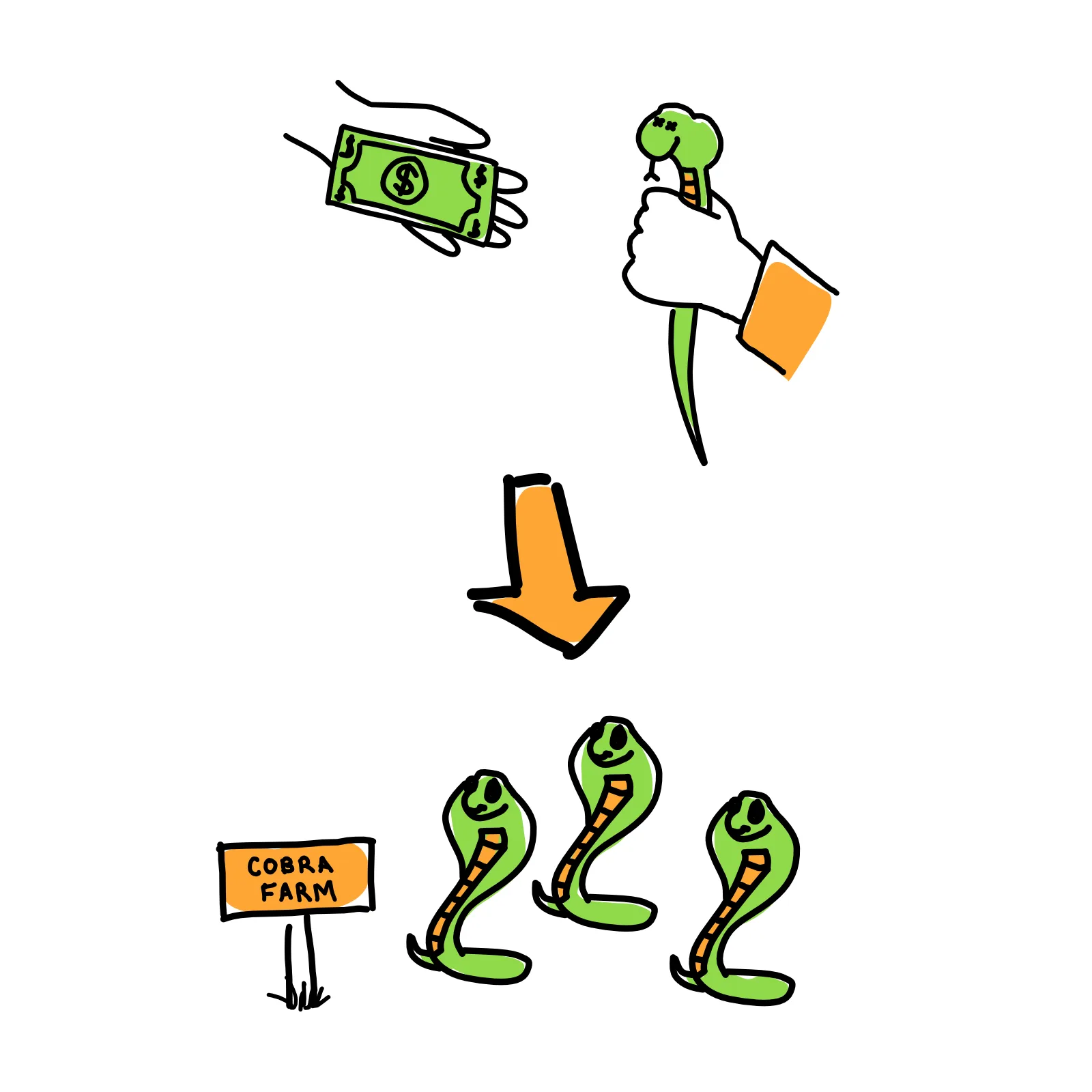
When a solution to a problem unintentionally makes it worse. Named after a colonial bounty on cobras in India that led people to breed cobras for the reward.
Comparative Advantage
The economic principle where an agent has an advantage over another when a particular good they can produce at a lower relative opportunity cost (i.e. at a lower relative marginal cost prior to trade) than their competitors.
Compound Growth
Compound Interest
The geometric progression ratio that provides a constant rate of return over the time period.
Conspicuous Consumption
The phenomenon of spending of money on and the acquisition of luxury goods and services as a way to publicly display economic power.
Cost-Benefit Analysis
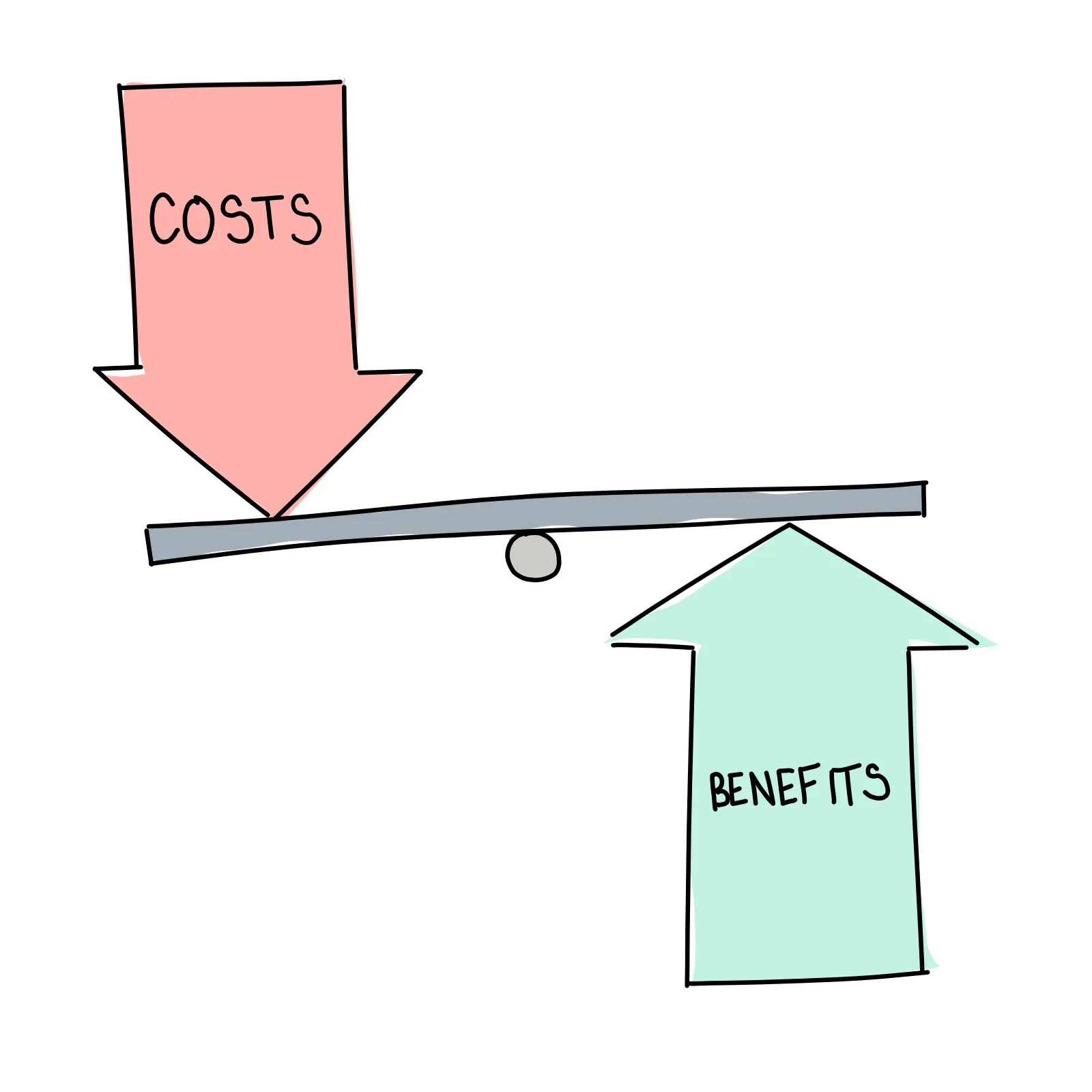
A systematic approach to comparing the total expected costs and benefits of different options in order to determine the most advantageous course of action.
Deadweight Loss
A loss of economic efficiency that occurs when an equilibrium state for a good or service is not achieved or is not achievable.
Diderot Effect
The phenomenon where acquiring one new possession triggers a cascade of further purchases to match it. A new couch leads to new pillows, then a new rug, then a new room.
Diminishing Marginal Utility
Diminishing Returns
In economics, utility is the satisfaction or benefit derived by consuming a product, thus the marginal utility of a good or service is the change in the utility from an increase in the consumption of that good or service. A 'diminishing utility' is simply the ongoing decrease in utility from additional goods or services.
Duverger's Law
A principle which states that plurality-rule elections (such as first-past-the-post) structured within single-member districts tend to favor a two-party system, and that the double ballot majority system and proportional representation tend to favor multipartism.
Economies of Scale
The reduced costs per unit that arise from increased total output of a product. For example, a larger factory will produce power tools at a lower unit price, and a larger medical system will reduce cost per medical procedure.
Endowment Effect
Divestiture Aversion · Mere Ownership Effect
The tendency to value something more highly simply because you own it. Sellers consistently price their possessions above what buyers are willing to pay.
Externalities
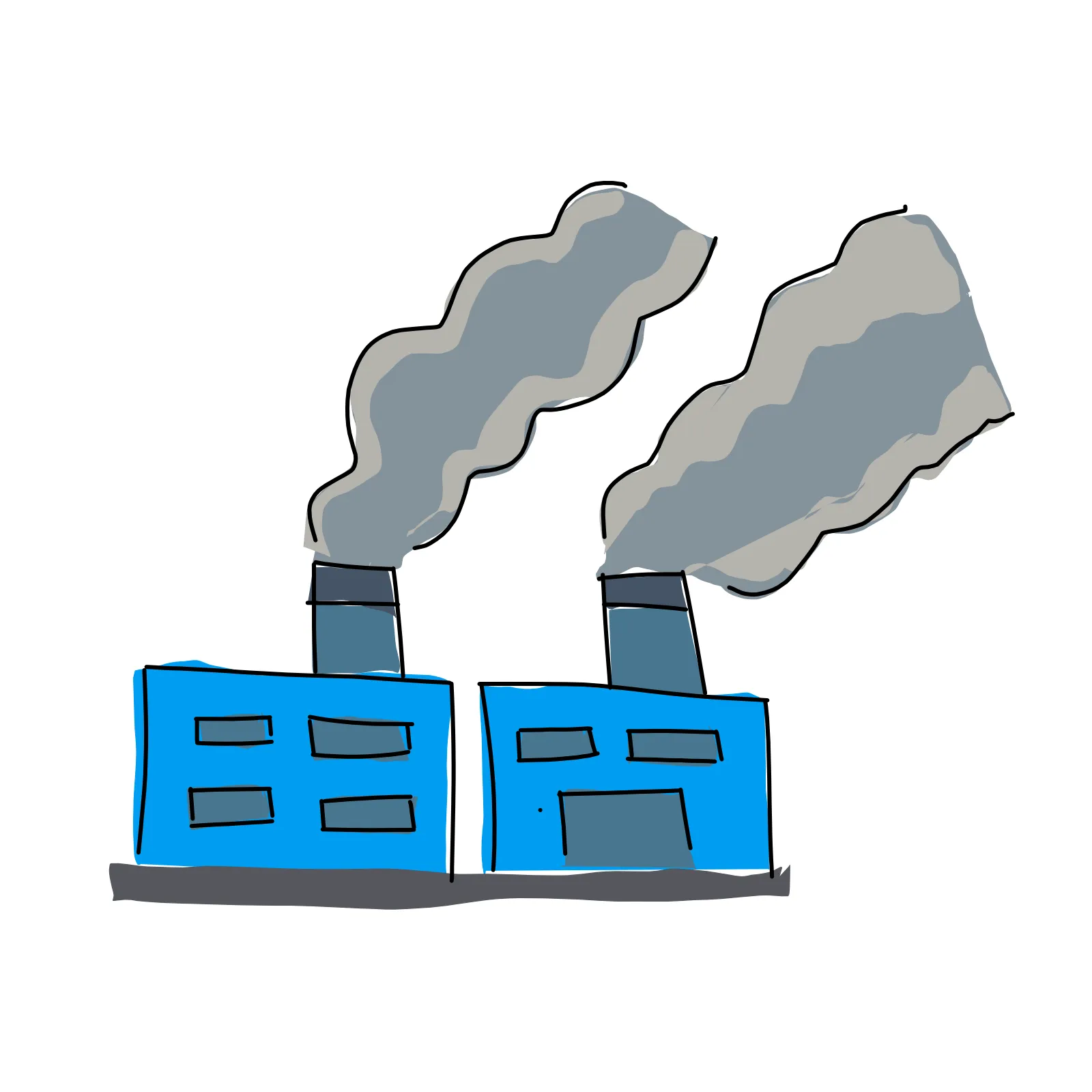
The unintended side effects of an activity that affect people who weren't involved in the decision. Externalities can be positive (a neighbor's garden) or negative (factory pollution).
Extreme Risk
Tail Risk · Black Swan Events
Risks of very bad outcomes or "high consequence", but of low probability. They include the risks of terrorist attack, biosecurity risks such as the invasion of pests, and extreme natural disasters such as major earthquakes.
Finite Vs. Infinite Games
Finite games are the familiar contests of everyday life; they are played in order to be won, which is when they end. But infinite games are more mysterious. Their object is not winning, but ensuring the continuation of play. The rules may change, the boundaries may change, even the participants may change—as long as the game is never allowed to come to an end.
First-Mover Advantage Vs. First-Mover Disadvantage
The advantage gained by the first-moving significant occupant of a market segment (property rights, branding, investments, etc), contrasted with the disadvantage of being the first to move into a market segment (using unreliable or inefficient technologies, making the first mistakes, etc.).
Free-Rider Problem
When those who benefit from resources, goods, or services don't pay for them, leading to under-provision of those goods.
Freemium
A pricing strategy by which a product or service (typically a digital offering or application such as software, media, games or web services) is provided free of charge, but money (a premium) is charged for proprietary features, functionality, or virtual goods.
Friction Costs
Transaction Costs · Switching Costs
The total direct and indirect costs associated with the execution of a transaction, often applied in finance but not limited to that domain.
Gift of the Magi
The parable of a young husband and wife and how they deal with the challenge of buying secret Christmas gifts for each other with very little money, where they each sell items they own (watch and hair) to buy gifts for the other that, as it turns out in a twist ending, are no longer useful to the other (a watch chain a combs, respectively), an example of comic irony.
Gresham's Law
A monetary principle stating that "bad money drives out good". If there are two forms of commodity money in circulation — which are accepted by law as having similar face value — the more valuable commodity will gradually disappear from circulation. Seen more often in earlier contexts of silver or even copper coins.
Holy Grail Distribution
In economics and finance, a probability distribution with a positive mean and right fat tail — a returns profile of a hypothetical investment that produces small returns centered on zero and occasionally exhibits outsized positive returns.
Hyperbolic Discounting
The tendency for people to increasingly choose a smaller (but more immediate) reward over a larger (but later) reward as the delay occurs sooner rather than later in time.
Ideal Theory Vs. Non-Ideal Theory
Full-Compliance Theory Vs. Partial Compliance Theory
An economic theory where "ideal theory" assumes strict compliance and works out the principles that characterize a well-ordered society under favorable circumstances, and "non-ideal" is worked out after an "ideal conception of justice has been chosen" and addresses what the parties are to do when conditions are not as perfect as they are assumed to be in ideal theory.
Jevon's Paradox
Jevons paradox · Jevons effect · rebound effect · backfire effect
The observation that improvements in the efficiency of resource use often lead to increased total consumption of that resource rather than decreased consumption. As efficiency lowers the effective cost per unit, demand rises enough to offset or exceed the original savings.
Local Vs. Global Optimum
Local Maximum · Local Minimum
A local optimum is the best solution within a nearby range of options; a global optimum is the best solution overall. Getting stuck at a local peak means missing the highest summit — a fundamental challenge in optimization, strategy, and everyday decision-making.
Loss Aversion
The tendency to feel the pain of losing something more intensely than the pleasure of gaining something of equal value. Losses loom larger than gains.
Lucas Critique
The argument that you can't predict the effects of a new economic policy by looking at historical data alone, because people change their behavior in response to the policy itself. Past patterns break when the rules change.
Lump of Labor Fallacy
Lump of Labour Fallacy · Fixed Work Fallacy
Mistaken belief that there is a fixed amount of work to be done in an economy, and therefore increasing automation or immigration will lead to higher unemployment, ignoring the potential for new jobs to be created.
Market Pull Technology Policy
The term for when the government sets future standards beyond what the current market can deliver, and the market pulls that technology into existence.
Matthew Effect
Matthew Principle

The old adage "for to him who has, will more be given..." — that those with existing status, privilege, wealth, etc. stand to benefit even more from it, compared to those without starting resources. In other words,"the rich get richer and the poor get poorer."
Mental Accounting
Psychological Accounting
The tendency to treat money differently depending on where it came from or what it's earmarked for, even though all dollars are objectively equal.
Money Illusion
Price Illusion
The tendency of people to think of currency in nominal, rather than real, terms. In other words, the numerical/face value (nominal value) of money is mistaken for its purchasing power (real value) at a previous point in the general price level (in the past).
Monopsony
A market structure in which a single buyer substantially controls the market as the major purchaser of goods and services offered by many would-be sellers — the inverse of a monopoly.
Moral Hazard
The phenomenon of taking more risks because someone or something else bears the cost of those risks.
Nash Equilibrium
A state in a strategic game where no player can improve their outcome by changing strategy alone. Everyone is doing their best given what everyone else is doing — even if the collective result isn't optimal.
Opportunity Cost
The value of the best alternative forgone where, given limited resources, a choice needs to be made between several mutually exclusive alternatives. Assuming the best choice is made, it is the ‘cost' incurred by not enjoying the benefit that would have been had by taking the second-best available choice.
Pareto Principle
80/20 Rule · Law of the Vital Few
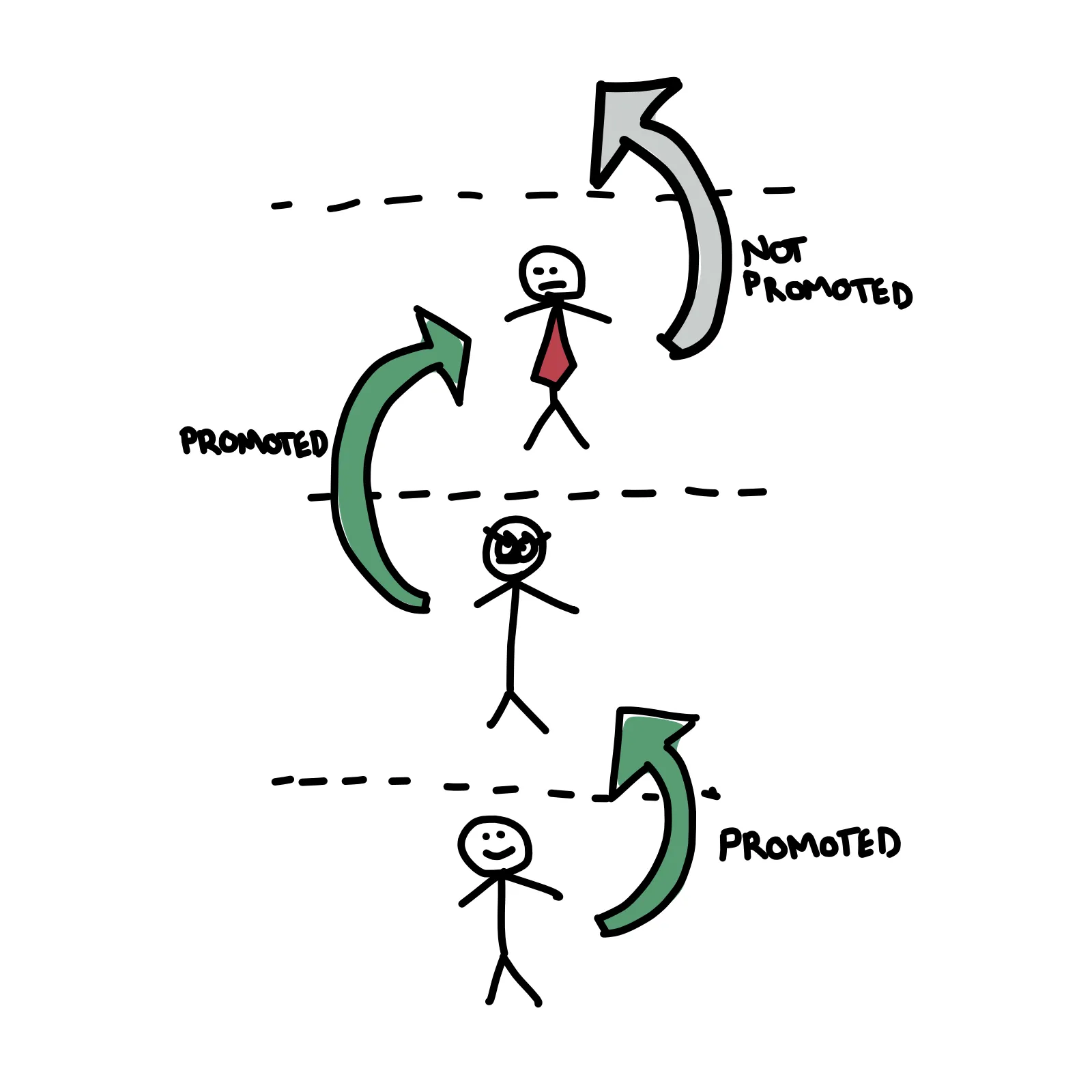
The observation that for many situations, roughly 80% of the effects come from 20% of the causes.
Present Value
Present Discount Value
The current worth of an expected future payment or income stream, discounted at an appropriate interest rate. A dollar today is worth more than a dollar tomorrow, because today's dollar can be invested to earn a return.
Price Elasticity
A measure of the responsiveness an economic variable is to a change in another variable, such as the relationship between lowering the price of a product and seeing how much more of it will sell as a result.
Prisoner's Dilemma
A standard example of a game analyzed in game theory that shows why two completely ‘rational' individuals might not cooperate, even if it appears that it is in their best interests to do so.
Region-beta Paradox
A counterintuitive pattern in which people recover faster from intense negative experiences than from mild ones, because intense distress triggers powerful coping mechanisms that milder discomfort never activates.
Resource Curse
Paradox of Plenty · Poverty Paradox
The phenomenon of the seeming paradox that countries and regions with an abundance of natural resources (such as fossil fuels and certain minerals) tend to have less economic growth, less democracy, and worse development outcomes than countries with fewer natural resources.
Rumpelstiltskin Effect
The phenomenon where giving something a name — a fear, a feeling, a diagnosis — reduces its power and makes it feel more manageable.
Scarcity
The fundamental economic condition of limited resources in the face of unlimited wants. Scarcity forces trade-offs and drives the value of goods.
Signaling Theory
A body of theoretical work examining communication between individuals, where the central question is when organisms with conflicting interests, such as in sexual selection, should be expected to provide honest signals (no presumption being made of conscious intention) rather than cheating.
Simulated Annealing
A probabilistic technique for approximating the global optimum of a given function. It is often used when the search space is discrete (e.g., all tours that visit a given set of cities).
Speculation Vs. Investing
Speculating typically refers to high-risk trades that are almost akin to gambling, whereas investments are based on fundamentals and analysis.
Sunk Cost Fallacy
The economic fallacy where a cost that has already been incurred and cannot be recovered (sunk cost) is tempted to be made nonetheless despite that it misallocates resources by depending on information that is irrelevant to the decision being made.
Supply and Demand
A classic economic model of price determination in a market. In a competitive market, the unit price for a particular good or other traded item such as labor or financial assets, will vary until it settles at a point where the quantity demanded will equal the quantity supplied, resulting in an economic equilibrium for price and quantity transacted.
Tiffany Problem
An anachronism of perception where historically accurate facts, names, or details are rejected by modern audiences as unrealistic because they clash with contemporary associations.
Trade-Off
A situation that involves losing one quality or aspect of something in return for gaining another quality or aspect.
Tragedy of the Commons
A situation within a shared-resource system where individual users acting independently according to their own self-interest behave contrary to the common good of all users by depleting that resource through their collective action.
Veblen Effect
Veblen Good
The counterintuitive phenomenon where demand for a luxury good rises as its price increases — because the high price itself signals status, making the item more desirable.
Vimes Boot Theory
Sam Vimes 'Boots' Theory of Socioeconomic Injustice
Concept introduced by British author Terry Pratchett in his Discworld series that the poor often end up spending more money on necessities like boots in the long run because they can't afford high-quality items initially (quality boots that cost fifty dollars but wouldn't need replacing versus affordable boots for ten dollars that would need replacing often.)
Win-Win
A conflict-resolution approach that seeks an outcome where all parties benefit, rather than one side winning at the other's expense.
Winner's Curse
When the winner of an auction overpays the expected value of the auction item in order to win the auction outright, leaving the winner, ironically, worse off.
Zero-Sum Vs. Non-Zero-Sum Thinking
Zero-Sum Bias
Zero-sum thinking assumes every gain comes at someone else's expense. Non-zero-sum thinking recognizes that outcomes can be win-win (or lose-lose) — the pie isn't always fixed.