Cobra Effect
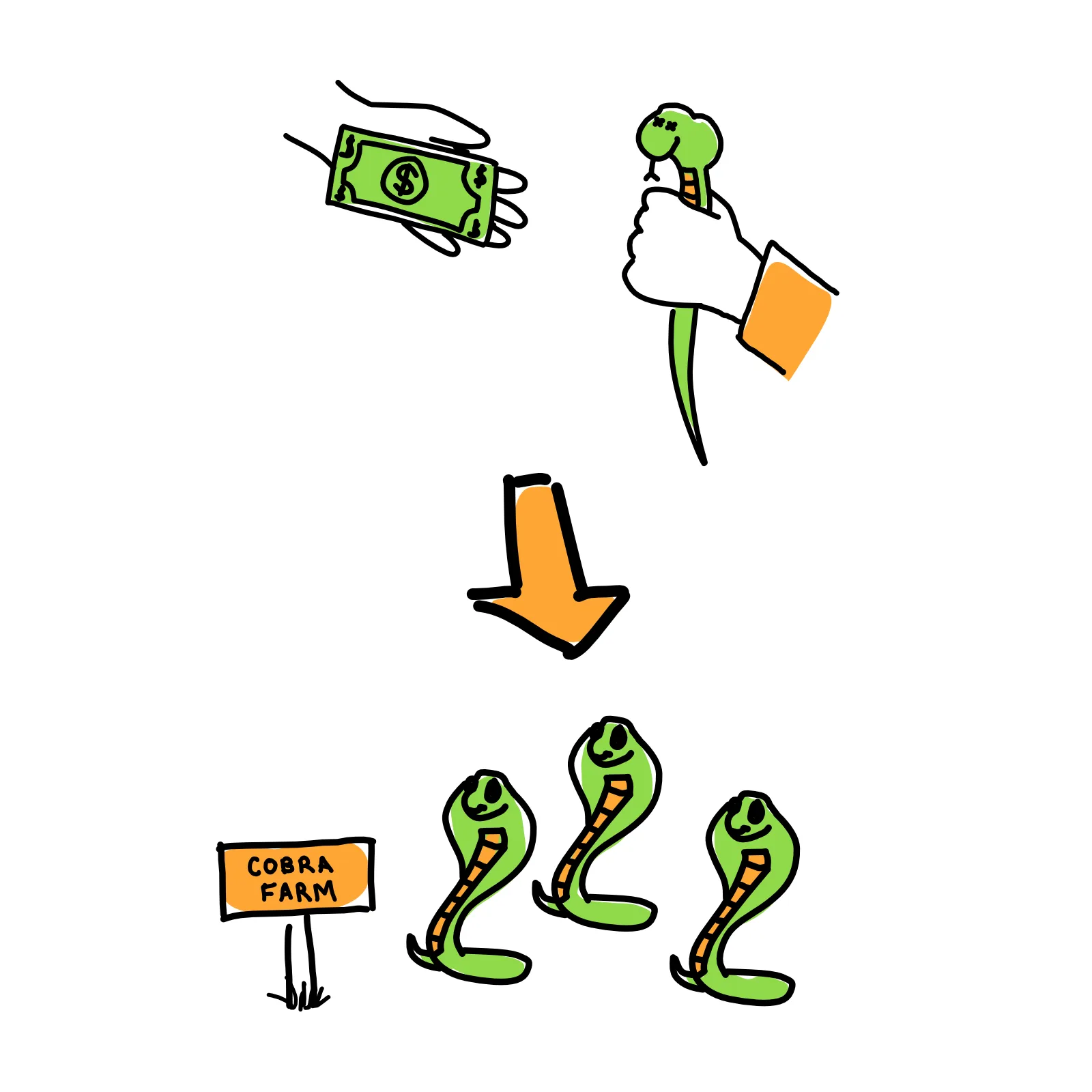
When a solution to a problem unintentionally makes it worse. Named after a colonial bounty on cobras in India that led people to breed cobras for the reward.
Origin
Named for an anecdote from British colonial India, where the government offered a bounty for dead cobras to reduce their population — only for enterprising locals to begin breeding cobras to collect the reward, ultimately increasing the snake population. German economist Horst Siebert popularized the term in his 2001 book Der Kobra-Effekt, using it as a parable for perverse incentives in economic policy.
Everyday Use
Based on a real set of events, the Cobra Effect reminds us to always consider incentives, and to think carefully about whether or not we are promoting a system to be 'gamed'. When it comes to dieting, for example, many people disproportionately focus on losing weight as opposed to building healthier eating habits and lifestyles, and some so much so that they persuade themselves to make unhealthy choices that prioritize weight over health.