Cost-Benefit Analysis
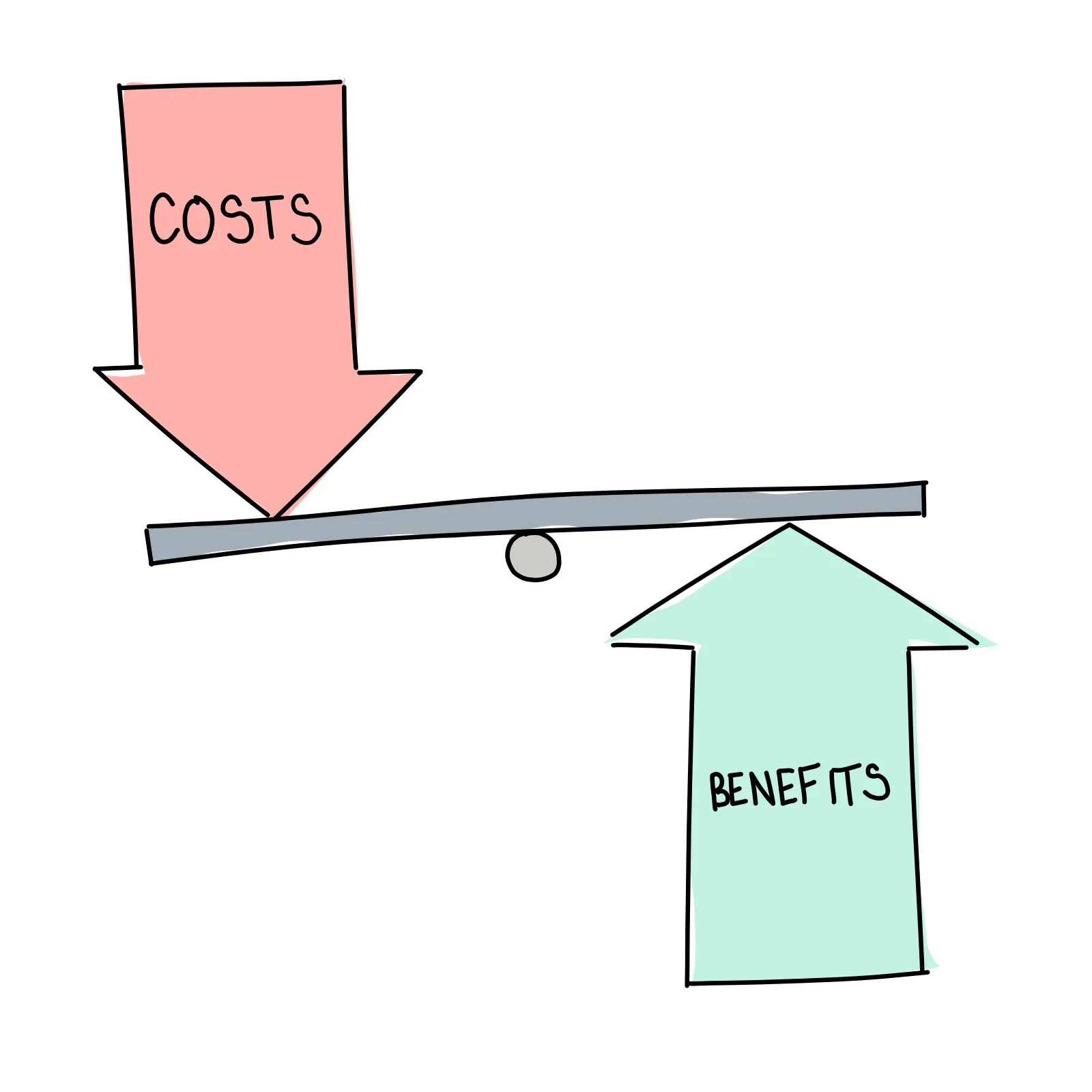
A systematic approach to comparing the total expected costs and benefits of different options in order to determine the most advantageous course of action.
Origin
French engineer Jules Dupuit laid the intellectual groundwork in 1848, calculating whether the public benefits of bridges and canals justified their costs. The technique was formalized in government practice by the U.S. Flood Control Act of 1936, which required that federal projects demonstrate benefits exceeding costs before approval.
Everyday Use
One of the thoroughly economics-minded concepts that plays a significant part in our daily decision-making, whether we are conscious of it or not. Looking at decisions and circumstances through a lens of cost-benefits allows us to balance the influence of seen versus unseen, and to understand the bigger picture of those inflections.