Stories & Narrative
Achilles Heel
A critical vulnerability in an otherwise strong position, named after the mythological Greek warrior who was invincible everywhere except his heel.
Anna Karenina Principle
Principle that states that successful outcomes require all relevant factors to be present and that a failure can be caused by the absence of any one of these factors.
Audience Effect
The tendency for people to perform differently when in the presence of others than when alone.
Bildungsroman
Literary genre that focuses on the coming-of-age or personal development of a protagonist, often highlighting their moral, psychological, and intellectual growth over time.
Catch-22
A no-win situation where contradictory rules make it impossible to escape. Any attempt to resolve the dilemma is blocked by the very logic meant to govern it — proving you qualify for relief simultaneously disqualifies you from receiving it.
Chekhov's Gun
A dramatic principle stating that every element introduced in a story must be necessary and relevant to the narrative; irrelevant elements should be removed.
Clarke's Third Law
The observation by the science fiction writer Arthur C. Clarke that "Any sufficiently advanced technology is indistinguishable from magic."
Deus Ex Machina
A plot device whereby a seemingly unsolvable problem in a story is suddenly and abruptly resolved by an unexpected and seemingly unlikely occurrence, such as the appearance of hero or deity, unknown inventory, or other contrived denouement.
Frankenstein's Monster
Metaphor drawn from Mary Shelley's fictional creature, representing the tragic consequences of unchecked scientific ambition, creation that turns against its creator, and humanity's dangerous impulse to master forces — including life and death — beyond its control.
Gift of the Magi
The parable of a young husband and wife and how they deal with the challenge of buying secret Christmas gifts for each other with very little money, where they each sell items they own (watch and hair) to buy gifts for the other that, as it turns out in a twist ending, are no longer useful to the other (a watch chain a combs, respectively), an example of comic irony.
Grok
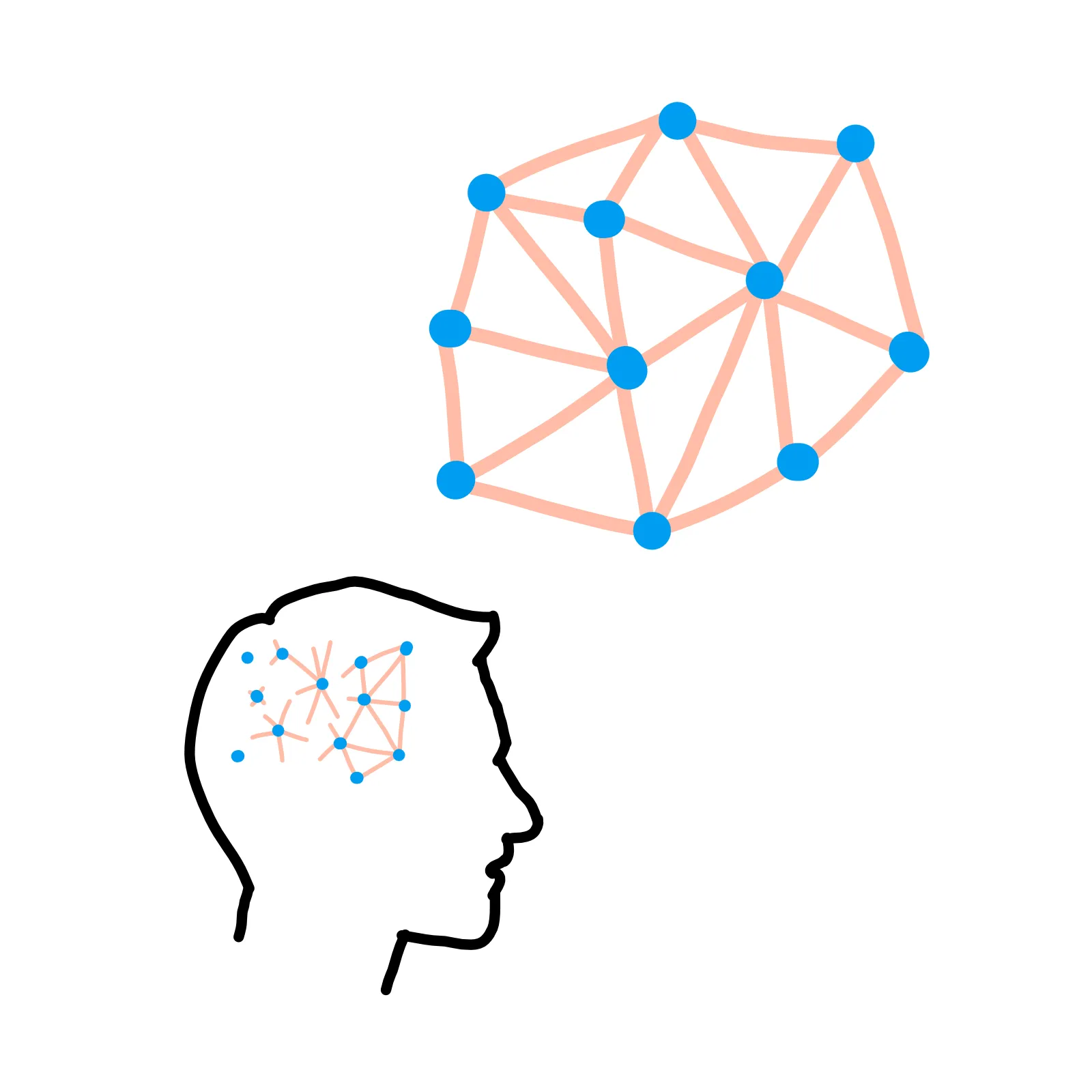
Understanding something so deeply and intuitively that it becomes part of you — to comprehend through empathy and identification rather than mere analysis.
Hero's Journey
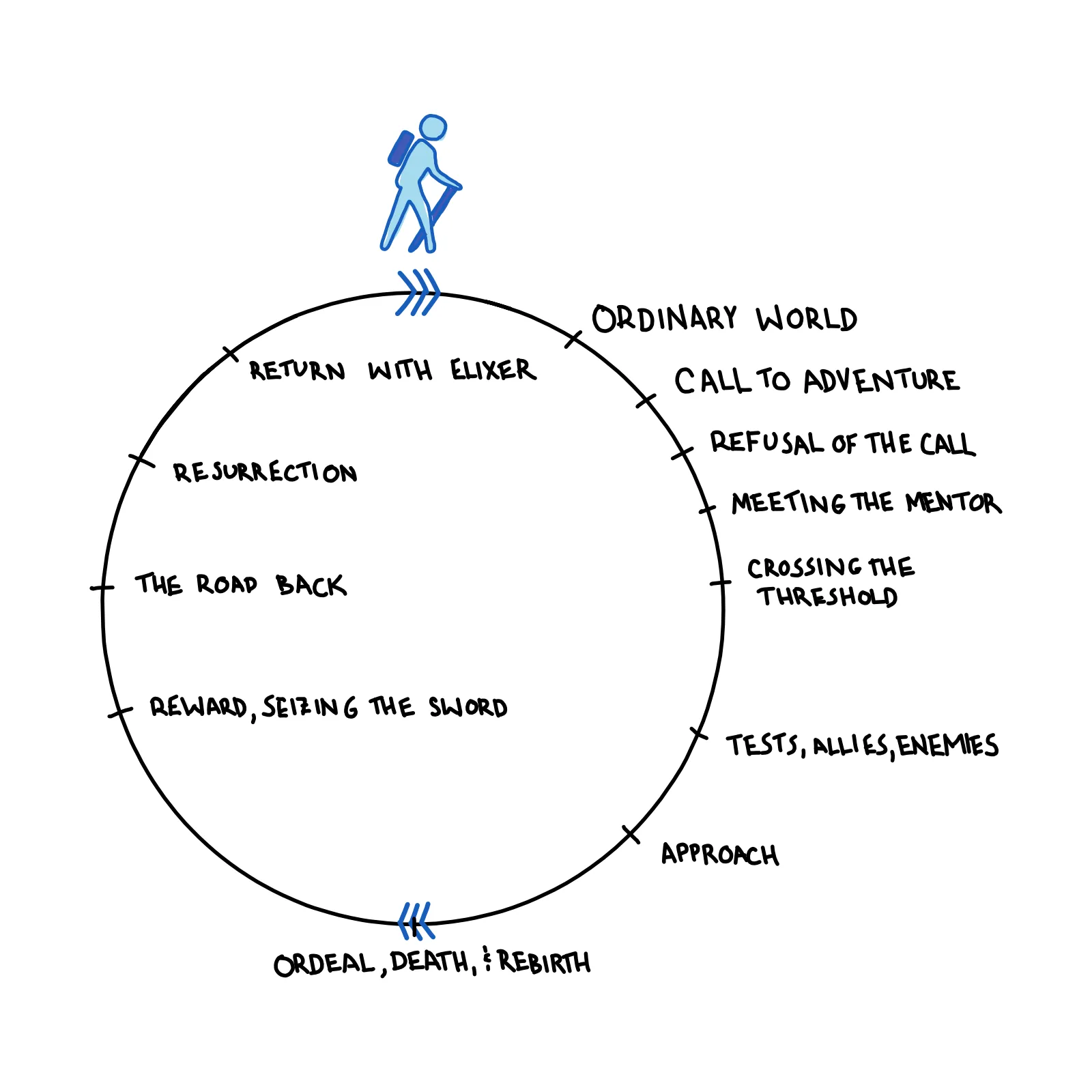
A common mythological narrative template in which a hero departs on an adventure, faces a decisive crisis, wins a victory, and returns home changed or transformed.
In Media Res
A storytelling technique that drops the audience into the middle of the action, skipping the setup. The backstory fills in later, but the hook comes first.
Kobayashi Maru
No-Win Scenario

A training exercise in the Star Trek universe designed to test cadets in a no-win scenario. Captain Kirk 'wins' by altering the original conditions of the game — seen either as cheating or creative problem-solving.
Kuleshov Effect
A film editing (montage) effect by which viewers derive more meaning from the interaction of two sequential shots than from a single shot in isolation.
Lilliputians
Adjective connoting "small in size" or "trivial" — often used to refer to narrow outlooks and trivial perspectives.
MacGuffin
McGuffin
A plot device in the form of some goal, desired object, or another motivator that the protagonist pursues, often with little or no narrative explanation. The MacGuffin's importance to the plot is not the object itself, but rather its effect on the characters and their motivations.
Madeleine Moment
The instance one is bombarded by a flood of memories and experiences made conscious by the unexpected stimuli of a connected object or place — as in the madeleine that sparked Proust's memories of his childhood in "In Search of Lost Time."
Pandora's Box
An artifact in Greek mythology where an object that is originally seen as a gift turns out to in fact be a curse. The only thing remaining at the bottom of Pandora's Box is 'Hope.'
Rashomon Effect
When the same event is given contradictory interpretations by different individuals involved.
Rumpelstiltskin Effect
The phenomenon where giving something a name — a fear, a feeling, a diagnosis — reduces its power and makes it feel more manageable.
Shaggy Dog Story
Shaggy Dog Yarn
A long-winded anecdote characterized by extensive narration, of typically irrelevant incidents, and terminated by an anticlimax or a pointless punchline.
Swan Song
A metaphorical phrase for a final gesture, effort, or performance given just before death or retirement.
Vimes Boot Theory
Sam Vimes 'Boots' Theory of Socioeconomic Injustice
Concept introduced by British author Terry Pratchett in his Discworld series that the poor often end up spending more money on necessities like boots in the long run because they can't afford high-quality items initially (quality boots that cost fifty dollars but wouldn't need replacing versus affordable boots for ten dollars that would need replacing often.)